Mixed Reality Development Services are transforming the way customers engage with products, allowing them to preview how that piece of furniture will look at home or how that makeup will look on their face even before making a purchase. There has always been a problem for retailers in bridging the gap between the online experience of browsing for a product and actually being able to experience it, and this problem is a direct factor that influences conversion rates and returns. Mixed reality bridges this gap by merging the digital experience of a product with the real-life experience of a customer, be it their living room, face, or aisle they stand in. And the more customers want this experience, the more retailers will turn to dedicated studios to deliver it properly. Abhiwan Technology offers mixed reality development services for companies that wish to create interactive experiences like virtual try-ons, visualization of products, and shopping apps.
What are Mixed Reality Development Services?
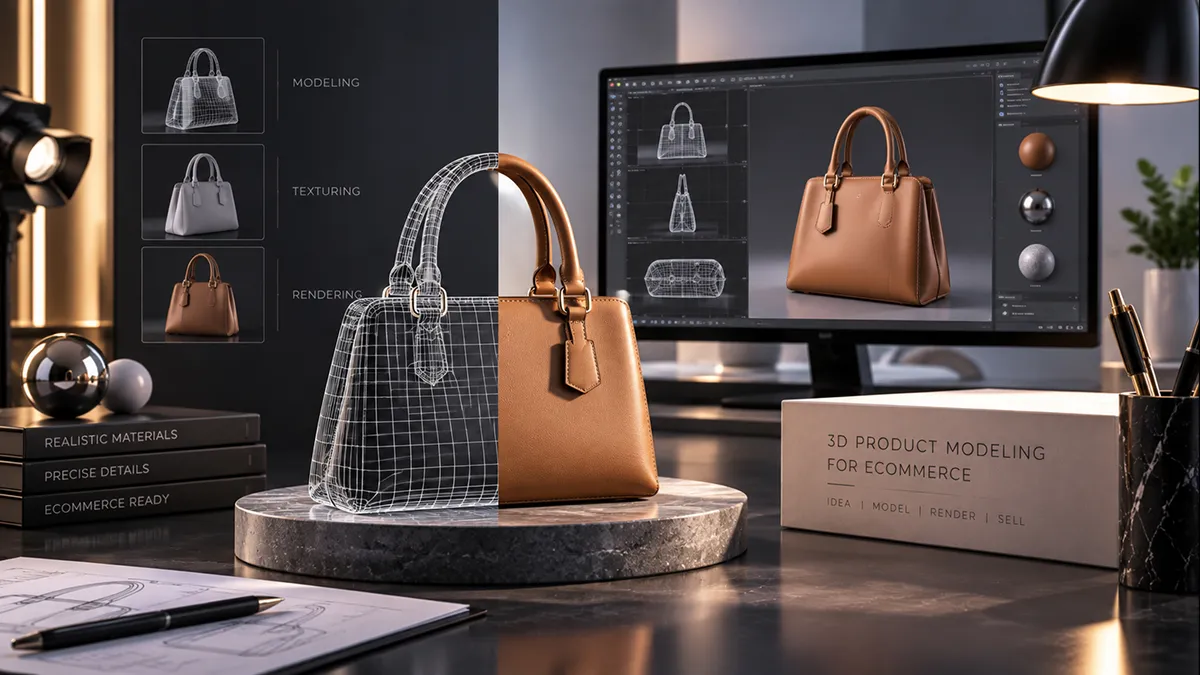
The process of mixed reality development consists of creating an experience that combines digital elements, 3D product models, or overlays with a customer's physical space in real time. It is different from using an AR filter in that most of the time it requires the experience to be able to understand depth, surface, and lighting to make the product look truly part of the space. To create this kind of experience, retailers usually have to turn to a mixed reality development company. These kinds of experiences would be well-suited to a mixed reality development firm like Abhiwan Technology to create the necessary 3D models, spatial awareness, interaction designs, and applications needed.
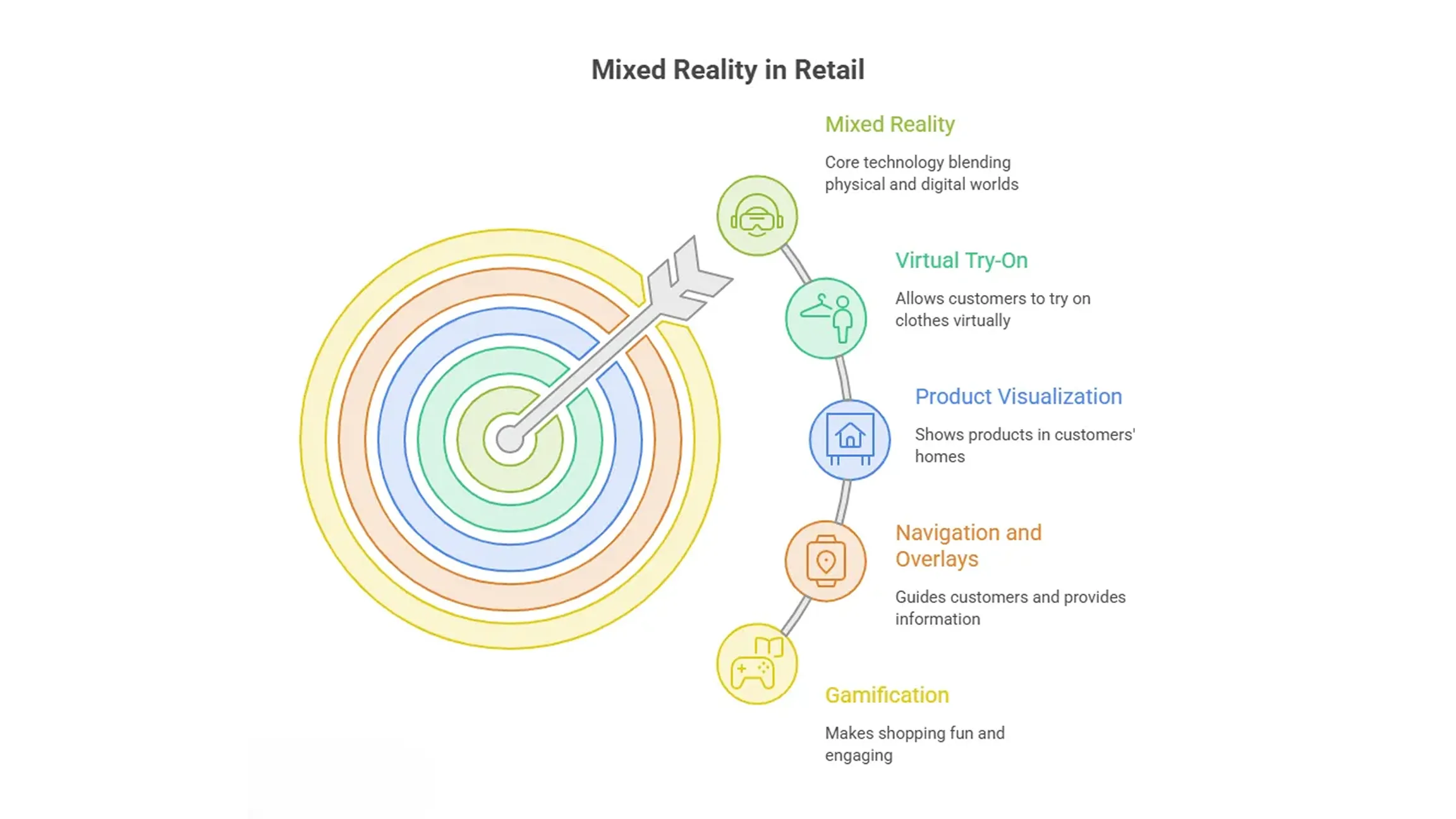
How Mixed Reality Development Services Help Engage Customers at Retail Stores
There are several approaches retailers use today in order to engage shoppers for longer periods of time and make them buy more confidently.
Virtual Try-On Experiences
Fashion and beauty brands use mixed reality technology to give customers a try-on of how their cosmetics, eyeglasses, or clothes will look on their face or body via their smartphone camera.
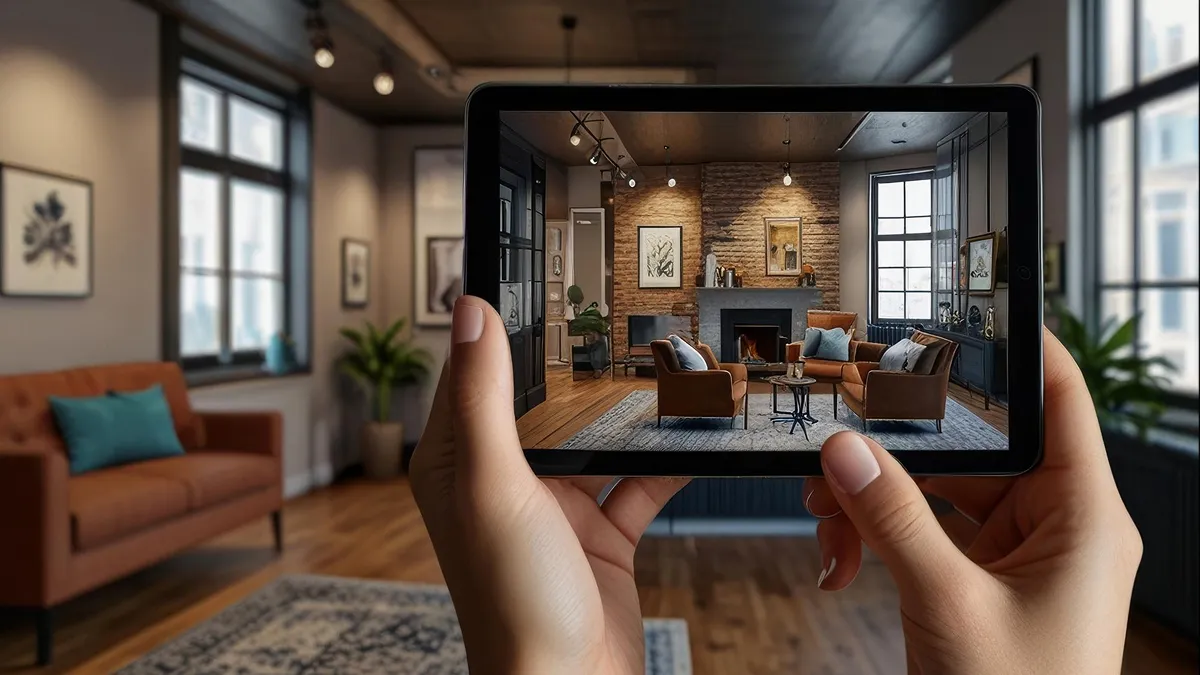
Product Visualization at Home
Furniture stores and other home products vendors allow the customer to insert a virtual sofa or a lamp in his/her living room prior to purchase by testing its size and style. It has been proven that the above method helps reduce the number of returns due to sizing issues.
Navigation and Overlays in the Store
Some companies apply mixed reality to help the buyer navigate through the store by overlaying on the physical aisle directions, special offers, or additional product info. Thus, a regular visit to the shop becomes an interactive guided experience.
Gamification in Retail
Game components like a scavenger hunt or a gamified reward system are applied by brands to the physical environment of the store or to the product packaging. The game-like features used in the examples above have much in common with mixed reality gaming technologies.
Virtual Showroom or Product Launch
Mixed reality allows retailers to set up a virtual showroom or product launch that a consumer can visit from home, using video, 3D graphics, and interactive elements. The above technique allows extending the coverage of the physical event well beyond those present there.
Applications of Mixed Reality in Retail Sectors
The following table shows some applications of mixed reality in various retail sectors.
| Retail Sector | Typical Mixed Reality Use Case | Primary Benefit |
|---|---|---|
| Beauty and Cosmetics | Virtual makeup and skincare try-on | Fewer returns, higher purchase confidence |
| Furniture and Home Goods | In-home product placement previews | Reduced size and fit mismatches |
| Fashion and Apparel | Virtual fitting rooms and styling tools | Increased engagement and repeat visits |
| Grocery and Big-Box Retail | In-store navigation and promotional overlays | Improved store experience and upsell |
| Entertainment Retail | Gamified in-store or packaging experiences | Longer dwell time and brand recall |
Moreover, Abhiwan Technology is capable of creating interactive gaming applications in mixed reality through the integration of physical products and the retail environment.
Mixed Reality Trends in Retail
Retail remains among the industries that embrace mixed reality technologies in their operations at an accelerating pace due to the need to stand out from the competition beyond mere price and convenience factors. The feature that makes people use VR is virtual try-on because users who try products in this way purchase the items more frequently and have lower rates of returns compared to people using only photos of products. This tendency has caused a growing number of retail businesses to hire a mixed reality development company.
How Mixed Reality Gaming Enhances Retail Experiences
Retail companies begin to take advantage of methods applied in mixed reality gaming to make the shopping process more interesting and engaging instead of being purely transactional. For instance, a makeup brand can create a virtual game during the launch of new products so that customers can unlock unique shades by interacting with the virtual display. In another case, a toy company could allow kids to play with an animated character placed on top of a physical package in the store.
What are examples of mixed reality?
The common examples are virtual furniture placement software, make-up and eyewear try-ons, industrial training programs that project the repair instructions on actual machinery, and even headsets such as the Microsoft HoloLens application, which finds use in manufacturing and healthcare. Within the domain of retail, mixed reality can be found in interactive window displays, virtual fitting rooms, and packaging that becomes active when seen through a phone camera. The expertise of a mixed reality development company can be used to apply the same principles in virtually any retail category, provided there is creative vision.
What is XR vs VR vs AR?
XR, or extended reality, refers to virtual reality, augmented reality, and mixed reality as an umbrella term covering several closely related yet still different technologies. Virtual reality creates a fully digital environment, replacing the user's surroundings, using the technology of a headset blocking everything from view. On the other hand, augmented reality projects digital elements onto the real environment without obscuring the latter.
Conclusion
Mixed Reality Development Services are an opportunity for retailers to create real opportunities to bridge the gap between virtual browsing and the in-store experience, and it is directly related to the conversion rate and returns. In this article, you have seen the variety of use cases for this type of technology among different retail industries. The choice of the development studio is important, as well as the concept, as poor-quality development can make the experience frustrating and not immersive instead of bringing additional value to the brand experience. With increasing customer expectations, those who invest in well-made mixed reality experiences now will definitely distinguish themselves from competitors until the time when this type of technology becomes the industry standard. When it comes to utilizing this technology for retailers, collaborating with a competent mixed reality development company will definitely help in making your idea a reality. Abhiwan Technology provides customized AR/VR and mixed reality development services that are tailored according to specific business and customer engagement needs.
Written By Charu Sharma