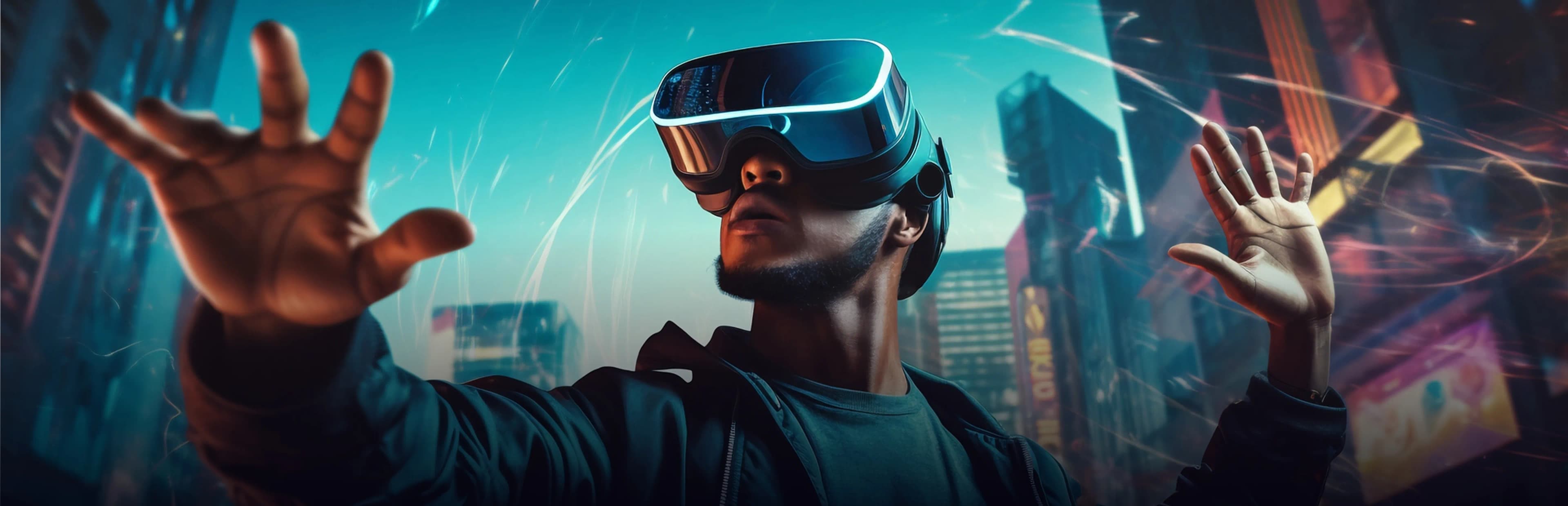
A mixed reality development company combines the digital and physical worlds into one cohesive experience where users can engage with digital objects that react to the real surface, lighting, and movements in the surrounding physical environment. Developing such an experience differs from developing an ordinary application because the solution should be able to comprehend the user’s physical environment on a real-time basis instead of just presenting content on a flat screen. Organizations in the fields of retail, health care, manufacturing, entertainment, and more look for such solutions to educate their employees or show off the product features in a unique way that cannot be provided by a usual screen.
What Does a Mixed Reality Development Company Do?
A company providing mixed reality development services integrates spatial computing, 3D design, and software engineering to create solutions that combine virtual content with the physical space in which the user stands. It usually requires depth sensors, cameras, and motion tracking technologies to make virtual objects interact seamlessly with real-world spaces like tables, walls, and floors. Different from typical app development teams, such a studio requires professionals who are experts in 3D modeling, spatial audio, and optimization for particular hardware, along with software engineers.
How a Mixed Reality Development Company Creates Immersive Solutions
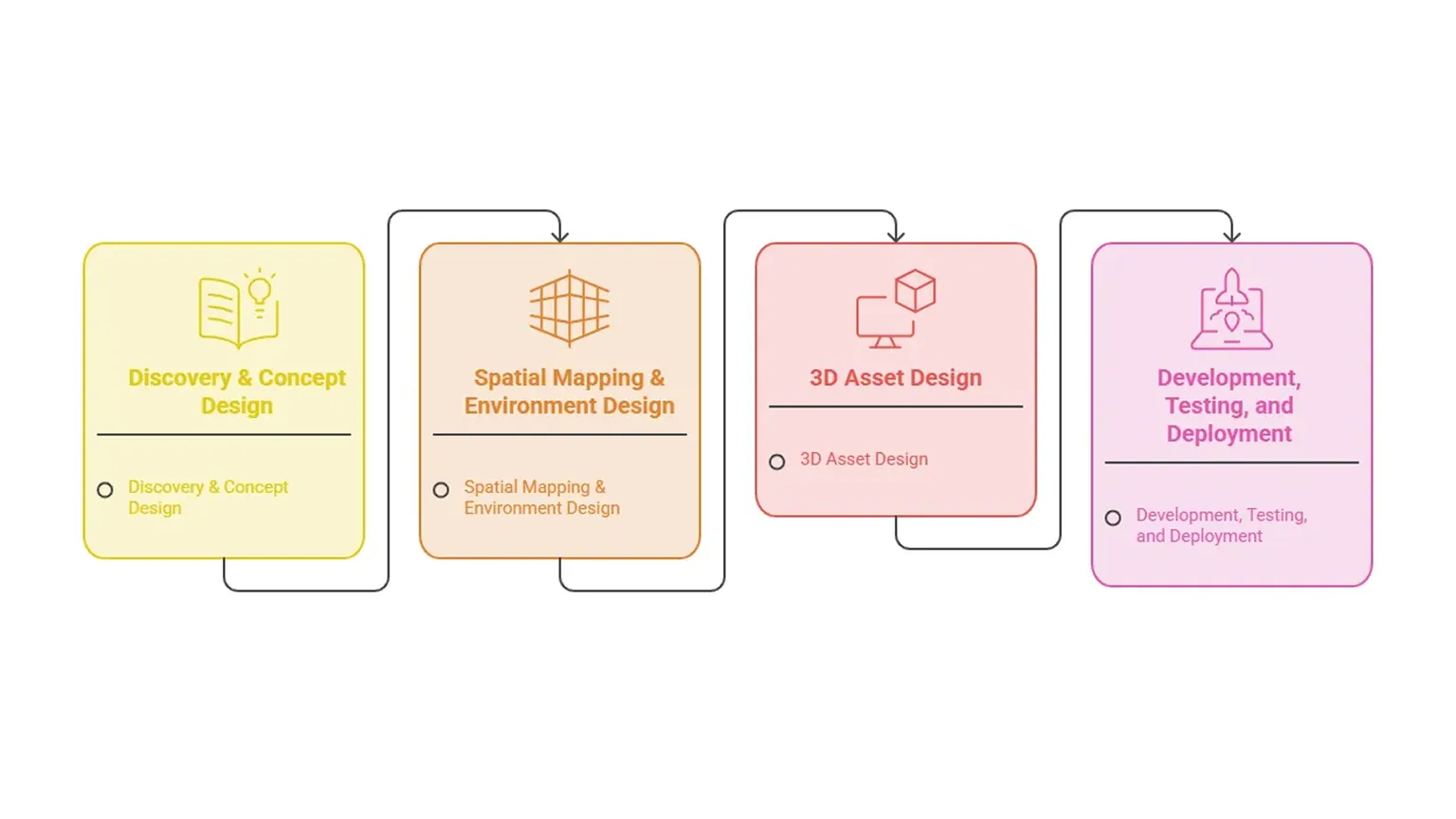
The development of a mixed reality experience has several distinct stages that do not change regardless of the hardware and software being used. However, companies providing mixed reality development services can tailor each one to fit the customer's requirements, whether they relate to training, retail, entertainment, or mixed reality gaming.
Discovery & Concept Design
This involves setting the parameters around use case, hardware platform, and the types of interactions that need to be designed for users, as there is a big difference between developing something for training versus a showcase at retail.
Spatial Mapping & Environment Design
From here, developers design how this experience will recognize and react to surfaces in the real world using software like ARKit, ARCore, or headset SDKs based on the platform that's being targeted. This is really where the magic happens because it allows for virtual objects to feel grounded within the physical space.
3D Asset Design
Artists create the models, animation, and textures that bring the experience to life while optimizing it so that the object works efficiently on mobile devices or standalone headsets. Inefficient asset optimization is one of the biggest culprits of laggy and draining apps.
Development, Testing, and Deployment
After that, engineers integrate everything mentioned above into a build and thoroughly test it using actual devices and environments, not just a simulator. After successful testing and ensuring the stability of the project, the studio deploys the experience to the target platform.
Mixed Reality Development Services by Use Case
A complete mixed reality development process typically requires several types of specialists, because a single mixed reality experience is rarely based on only one of them.
| Service | What It Includes | Common Use Case |
|---|---|---|
| Spatial Mapping and Tracking | Surface detection, occlusion, and motion tracking | Precise object placement in real environments |
| 3D Asset and Environment Design | Models, animations, and interactive environments | Product visualization and virtual training |
| Headset and Device Integration | Optimization for HoloLens, Quest, and mobile AR | Enterprise training and field service tools |
| Interaction and UX Design | Gesture, voice, and gaze-based interaction design | Hands-free industrial and medical applications |
| Mixed reality gaming Development | Multiplayer logic, physics, and immersive environments | Entertainment and location-based experiences |
| Testing and Performance Optimization | Frame-rate tuning and battery efficiency work | Experiences competing on comfort and smoothness |
Market of Mixed Reality Development: Statistics
There is a steady increase in demand for mixed reality in 2026 due to manufacturing companies, hospitals, and retailers seeking solutions for training their staff and demonstrating products without spending money on creating environments each time. The need for enterprise training, particularly, has caused the adoption of mixed reality, as it has been proven that overlaying instructions on real devices decreases mistakes compared to reading traditional instruction manuals. The growth has also encouraged studios to create separate teams working with mixed reality, instead of seeing mixed reality development as a part of the AR/VR team.
Applications of Mixed Reality in Everyday Life
Retailers use mixed reality in order to allow customers to visualize how new furniture/appliances will look at home before purchasing them. Manufacturing companies use mixed reality for hands-free training of machinery. Brands related to the entertainment industry start to implement mixed reality gaming, which provides users with a completely new experience of playing games by merging real space and virtual characters or items.
Is mixed reality better than VR?
Neither can be said to be superior since the two are used to resolve different issues. While virtual reality creates a completely virtual environment where the user’s environment is substituted with digital imagery, great for immersive training or entertainment, mixed reality integrates virtual content into the actual environment to assist users in situations when they need to interact with the physical environment, such as repairing machinery or shopping in a physical store.
How does mixed reality work?
Mixed reality uses the camera, depth sensors, and motion sensors of a device to detect its real environment, including the presence of surfaces, distances, and lighting, and then places digital elements in such an environment by making adjustments based on user movement. Devices like HoloLens have special sensors to detect the environment, but mixed reality on smartphones uses special frameworks, ARKit and ARCore, to accomplish the same using camera equipment only.
Conclusion
A mixed reality development company combines the skills of spatial computing, 3D design, and software engineering to deliver experiences that seamlessly merge the real world and the virtual one. The process starts with concept design, spatial mapping, asset development, and thorough testing on devices and ends with the release of the final experience to the end-user. Companies looking to embark on a journey into mixed reality projects should find a studio that is able to deliver the whole chain of processes, not just one part of it, because any flaw in the process will be reflected in the poor quality of the final product. The rising popularity of the technology in retail, healthcare, and manufacturing implies that collaboration with a studio capable of combining mixed reality skills in the creative and technical fields is the best way forward.
Written By Charu Sharma