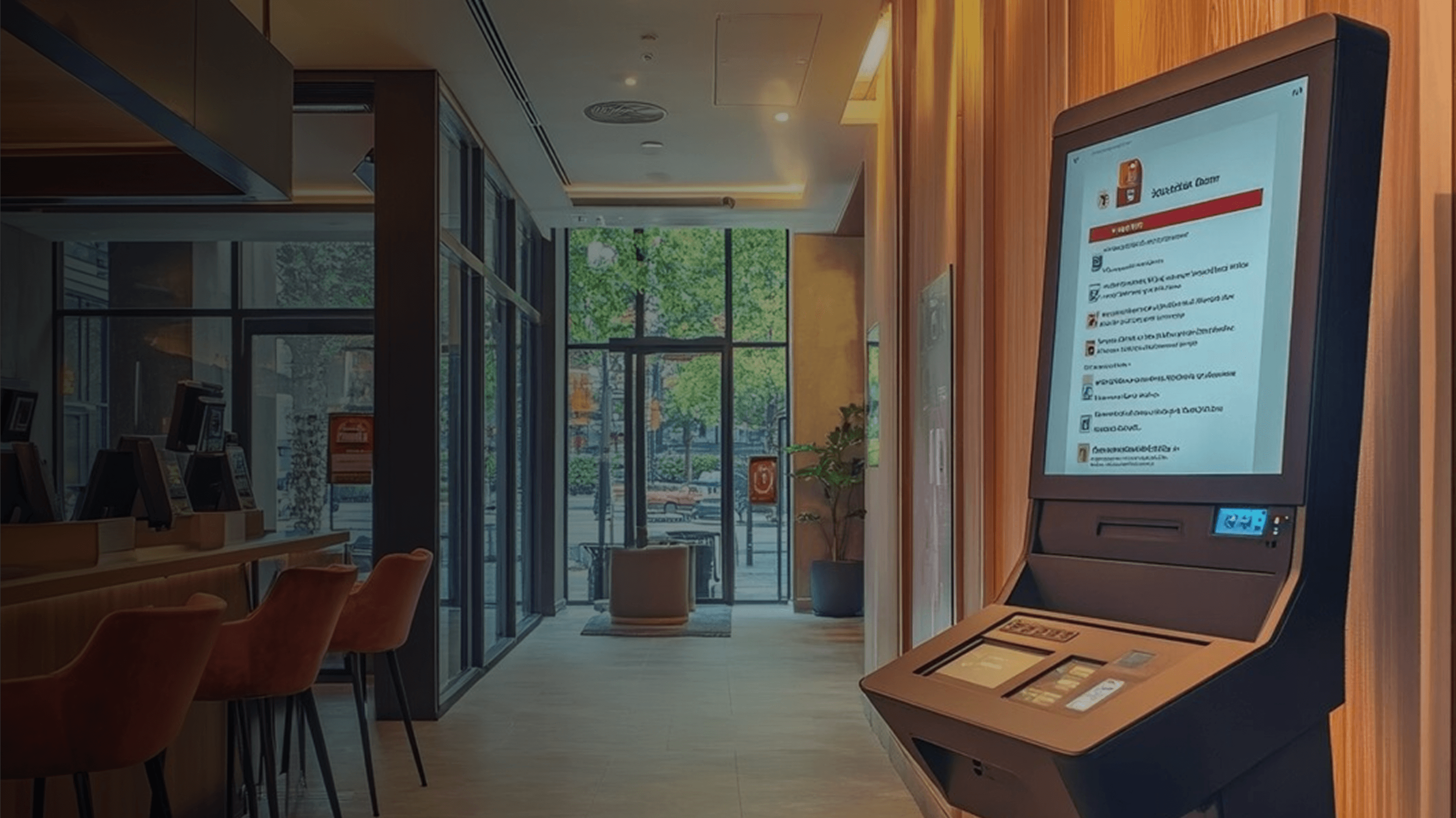
An interactive kiosk development company takes care of the entire development process from the front-end interface to the back-end software, ensuring that a self-service terminal functions properly in a public environment. A business chooses a specialized partner instead of just any app development studio since the kiosk software is subject to a range of unique requirements; it should function unattended for long periods of time, withstand public usage, and may sometimes require integration with payment gateways or databases. If any of those elements are developed improperly, the kiosk will become a source of trouble for the company instead of its added benefit. Abhiwan Technology specializes in custom kiosk software development based on business specifications and requirements. In this guide, we explain what a kiosk development partner does, the types of kiosk applications that businesses tend to develop, and what to expect regarding costs and process.
What an Interactive Kiosk Development Company Offers
Interactive kiosk development company focuses on developing the software part of the product, the interface and features as well as integrations, that make the kiosk functional. Unlike considering these components separately, many companies opt for building them simultaneously since there might be troubles associated with the lack of proper integration between the interface and third-party software like databases and payment systems. The aim here is to ensure that the interactive kiosk software functions correctly with the existing hardware.
Apart from initial interactive kiosk development, many companies also offer interactive kiosk services which imply after-sales services such as technical support and updates of software. An interactive information kiosk might require updates to its software in order to function properly and stay compatible with other connected systems. The software aspect of the development process requires a separate mention as well. The reliable interactive kiosk software should cope with heavy transaction traffic without failing, recover seamlessly from a network outage, and be protected against potential security threats.
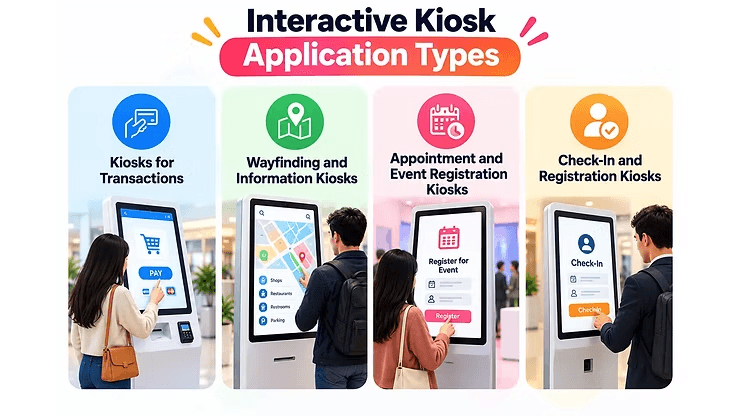
Interactive Kiosk Application Types
There are several types of interactive kiosks, and identifying which one is best for your application will impact nearly all subsequent decisions.
Kiosks for Transactions
These kiosks handle orders, transactions, and ticket booking. They integrate directly with POS systems or payment gateways, allowing clients to make payments without staff intervention. These kiosks are popular among retail stores and quick service restaurants (QSRs). While their development requires special care for payment security and system reliability, the process is relatively straightforward.
Wayfinding and Information Kiosks
These kiosks help users navigate around places and obtain the necessary information without requiring staff intervention. Shopping malls, hospitals, and office buildings deploy them to provide direction, facility information, and other useful data. Although their backend is relatively simple, the information needs to be continuously updated.
Appointment and Event Registration Kiosks
These kiosks book appointments, print event badges, and process visitor registration. They are normally integrated with scheduling systems and CRMs for organizing and updating the information.
Check-In and Registration Kiosks
This type of kiosk enables people to check in independently and is popular in healthcare centers, event venues, and coworking centers. This helps to minimize queues at reception desks and makes such kiosks medium-complex in terms of development.
Benefits of Choosing a Custom Kiosk Development Partner
Engaging with an interactive kiosk development studio brings benefits that are not limited to a functional touch screen interface.
Reduced integration risks
An experienced team knows where the pitfalls can be in the process of integrating a kiosk with a POS system, CRM, payment gateways, or any other software. It leads to fewer unpleasant surprises in the testing phase and smoother deployment compared to greenfield integration with a new team.
Correct selection of hardware
Hardware chosen by an experienced partner depends on expected transactional volume, weather conditions (indoor/outdoor), and robustness of the solution, and not only on costs. Otherwise, it results in extra money spent or frequent breakdowns of the hardware.
Support after deployment
An experienced company provides a support plan for software updates, security patches, and technical assistance regarding the interactive kiosk development it provided, so the client isn’t left with a broken solution and without any guidance on how to fix it. Such an approach is especially important for kiosks because they represent a public installation.
User experience that accounts for realistic conditions
Realistic user experience design takes into account accessibility, speed of comprehension, and error recovery because a public kiosk is utilized by distracted and possibly unfamiliar users. Bad UX means abandoned transactions and angry customers waiting in front of your brand.
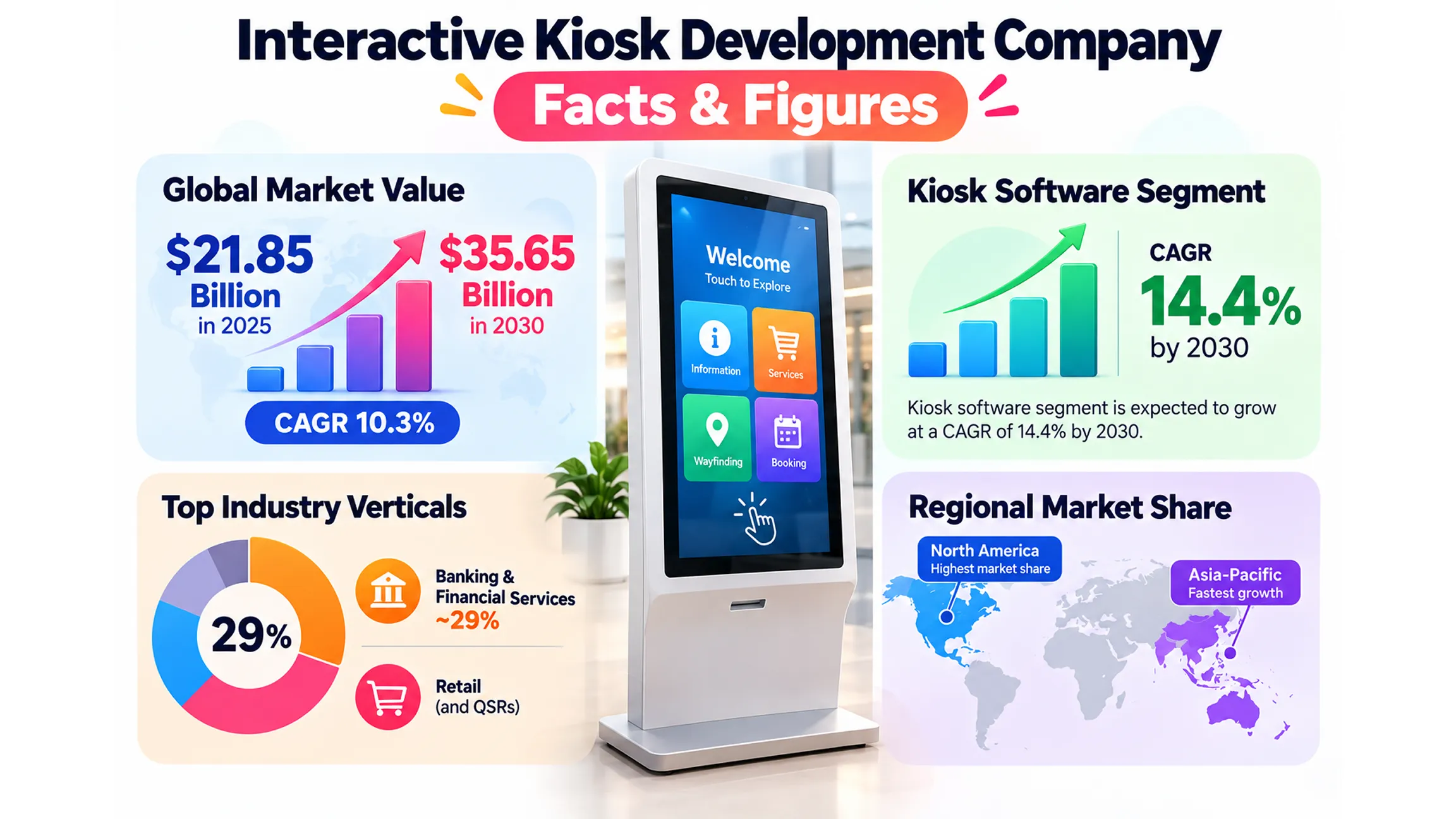
Interactive Kiosk Development Company: Facts & Figures
- The market value of the global interactive kiosk market in 2025 is estimated at nearly $21.85 billion, while its size will reach $35.65 billion by 2030, growing at a CAGR of 10.3%.
- The kiosk software segment is forecasted to grow at a CAGR of almost 14.4% by 2030, despite being smaller than the kiosk hardware segment.
- Banking and financial services dominate in terms of vertical, with nearly 29%, followed closely by retail and QSRs.
- North America has the highest regional market share currently, while Asia-Pacific is expected to register the highest growth in the upcoming years.
Custom Kiosk Solutions by Abhiwan Technology
Founded in 2018, Abhiwan Technology provides comprehensive interactive kiosk services, which involve transactional, wayfinding, and check-in kiosk solutions in retail, event management, and enterprise spaces. Their in-house development and design teams handle various activities such as development of software, user interface design and integration without involving any other parties. The studio is able to deliver augmented reality, virtual reality, and gamification projects, so it can be considered a good fit for companies looking to develop an interactive kiosk application beyond the typical menu screen, such as an interactive product configurator. Each project is scoped, taking into account the application type and number of transactions.
How Do You Develop a Kiosk Application?
The development process begins with determining whether you will be developing either a transactional application, an interactive information kiosk, or a check-in application because that decision affects the development process that follows. Next, the development team builds a prototype for the user interface for testing purposes, builds the connections between the application and the necessary systems in the backend, and tests the application on the target hardware long before it is released to the general public. The need for real-world testing in the case of kiosks is more significant than any other software because the touchscreen will endure rougher treatment by the public.
What Programming Language Is Best for Kiosk Software?
There is no particular language that is obligatory to use, as interactive kiosk software is developed using different stacks according to various devices and application requirements. Some kiosk interfaces can be developed using web-based languages such as HTML, CSS, and JavaScript and be packaged in a kiosk mode browser so that they can be easily updated from a remote server. Some interfaces are developed using such native programming languages as C# or Java, providing higher reliability and performance when the Internet connection is not available.
Conclusion
The interactive kiosk development company specializes in software development and integration so the kiosk works properly without requiring the client to oversee software development by several vendors. Software development can differ according to the particular application; for example, the software needs of the wayfinding kiosk are not necessarily identical to those of the checkout terminal. Abhiwan Technology creates the software for the kiosk considering the application needs instead of using the same template for all applications. It is necessary to know the conditions for further software support and maintenance before developing any application. These services ensurthe interactive information kiosk continuesue to function properly.
Written By Vaibhav Karanwal