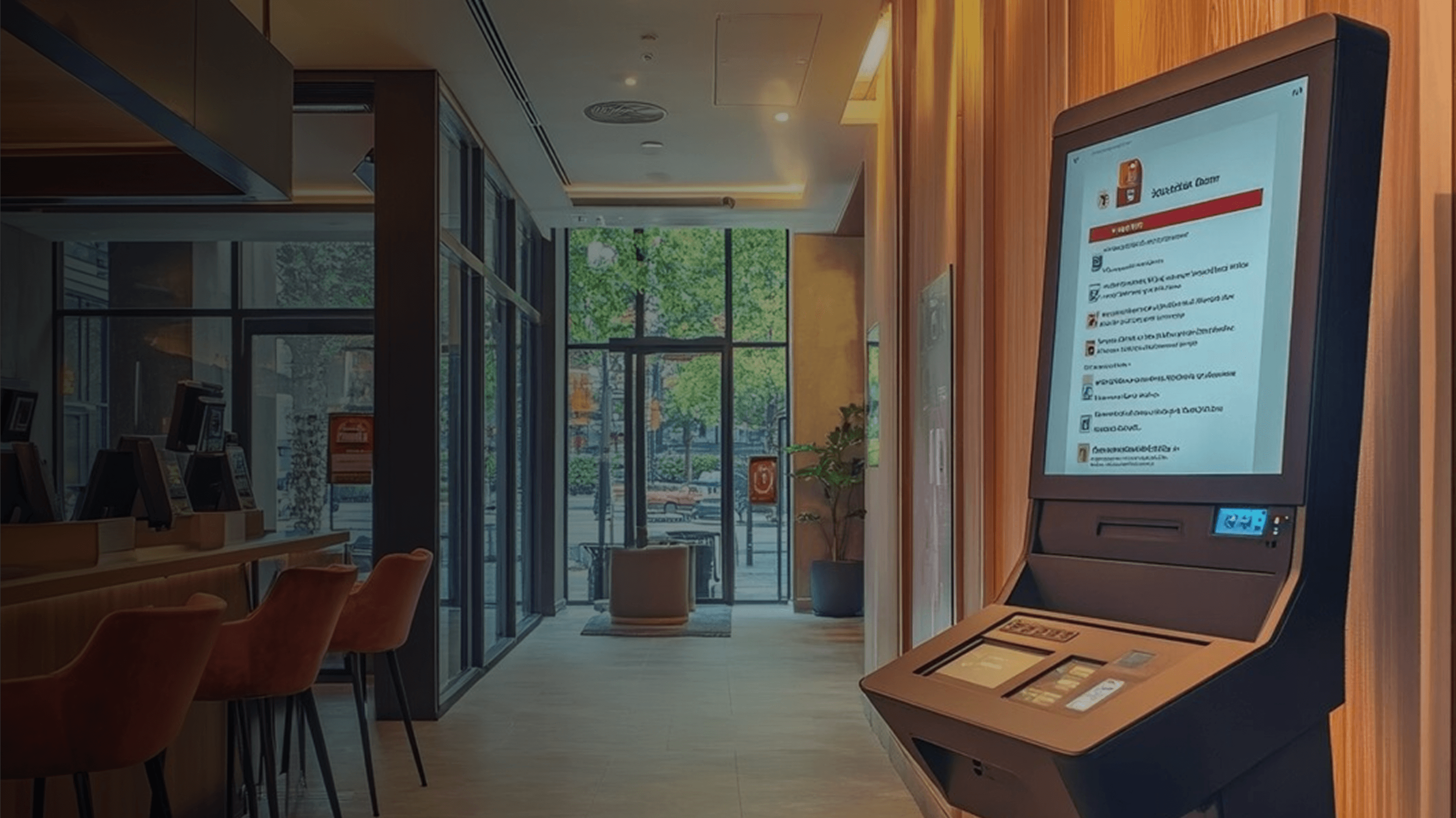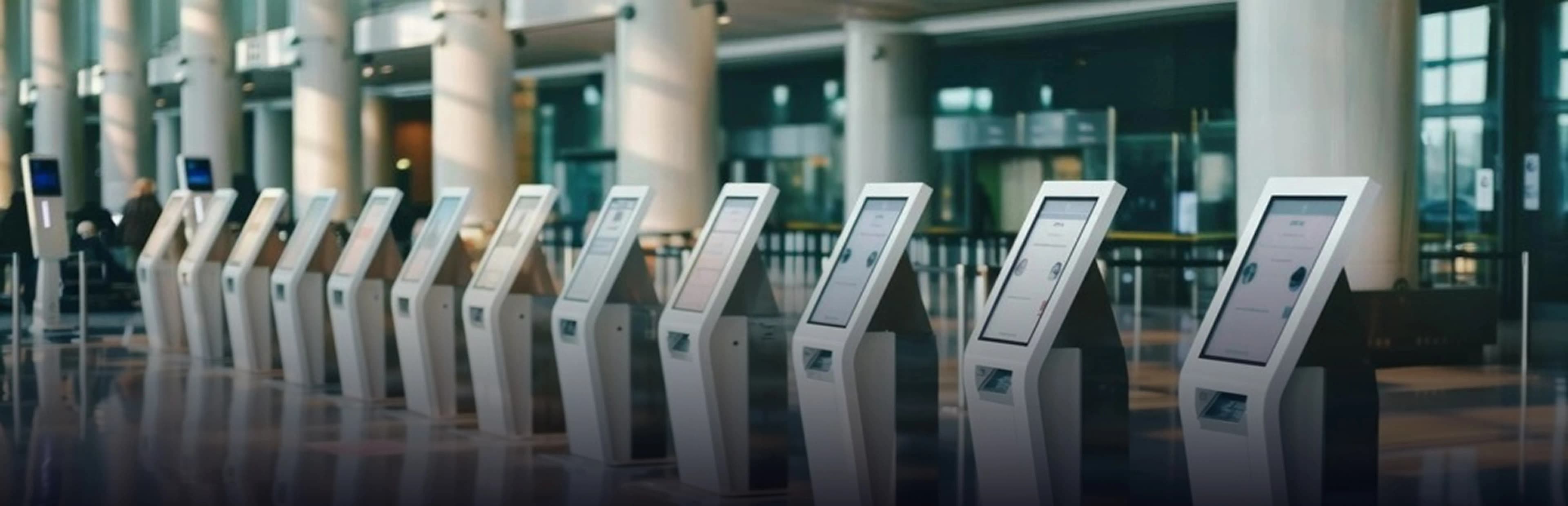
Interactive kiosk development is now becoming a vital budget item for enterprises aiming at decreasing the waiting time. If the kiosk is properly designed, it may handle check-ins, order management, payments, or searching for information independently, operating around the clock without any help from employees. For those enterprises that consider investing in such a project, the question is not if it works but rather how the development process and software will fit your already existing POS, CRM, or inventory system. Abhiwan Technology provides customized kiosk applications for enterprises that require more advanced design than a typical template, including self-service kiosks, interactive displays, or touch applications. Here you will find the description of kiosk creation, its costs, and when it is more profitable to hire a developer than to use an out-of-the-box solution.
What Is Interactive Kiosk Development?
Interactive kiosk development is the construction of the hardware setup, software interface, and backend integrations that will enable the touchscreen terminal to perform a certain task independently of any employee being present nearby. Usually, a business hires an interactive kiosk development company if the task requires more customization than provided by a standard template, such as integrating checkout with an existing inventory management system.
The development itself involves three tiers: the physical housing and the hardware, the interface that customers will interact with, and the backend connection to the payment processor or database. Many vendors offer this as interactive kiosk services, combining all the steps into one package instead of making a business acquire these components from multiple sources.
This is important for a business since a kiosk not developed to work well will be a burden rather than help and will create support requests instead of reducing expenses. Robust interactive kiosk software should be capable of processing transactions reliably and securely and continue to operate even in the absence of a network connection.
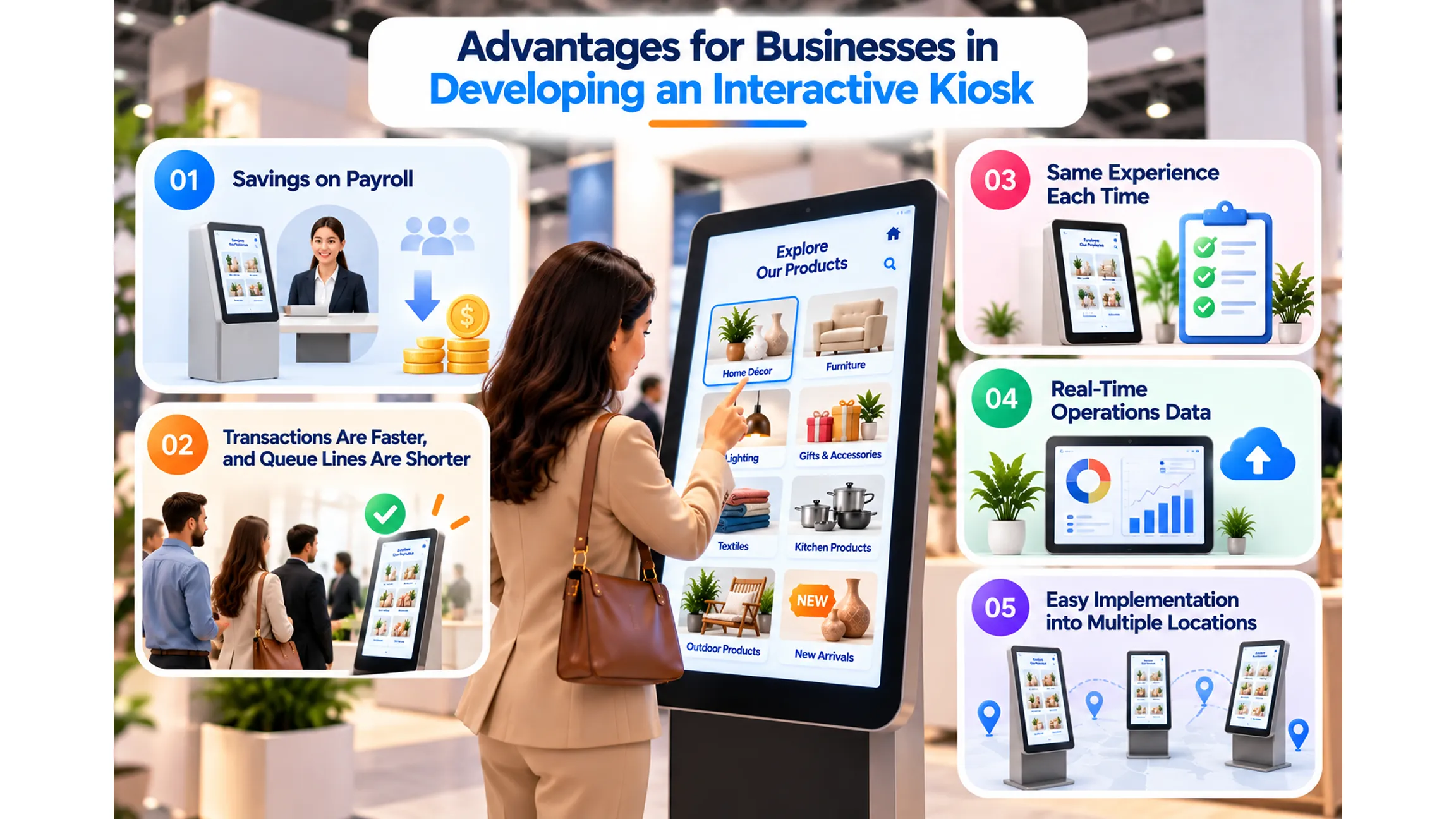
Advantages for Businesses in Developing an Interactive Kiosk
Businesses develop interactive kiosks since the profit may be seen in improvement, i.e., performance, rather than in customers' benefits.
Savings on Payroll
If the right interactive kiosk services are provided, then one kiosk will be able to process as many transactions as a staffed counter does during the busiest times of the day, making the business save on payroll.
Transactions Are Faster, and Queue Lines Are Shorter
It is possible to complete the whole process of transactions quickly without being dependent on staff at the registers, especially during the busiest times when queue lines are an essential issue.
Same Experience Each Time
Since kiosks offer the same experience to each customer, no variations may happen due to different people performing the same process differently.
Real-Time Operations Data
All interactions at the kiosk can be documented, and data about popular options and bottlenecks will become available instead of just assuming everything.
Easy Implementation into Multiple Locations
Once the design of the kiosk is validated at one location, a good interactive kiosk development company will be able to implement the same kiosk at other locations.
Important Features for an Interactive Kiosk
To become successful, a kiosk requires more than just a touchscreen and intuitive interface. Such features must correspond to the kind of task that a kiosk must perform.
Touch-Friendly User Interface
The interface of the kiosk should be user-friendly, meaning there must be simple-to-see buttons, easily readable text, and other elements allowing the user to perform actions on their own.
Payment System
In order to provide payment services, a kiosk can integrate with options like cards, mobile payment systems, or even digital wallets, thus providing fast and safe transaction services.
Integration with the Back-End
Integration with other platforms like POS, CRM, inventory, booking, and other back-office services allows keeping information current automatically, without entering it manually.
Remote Monitoring
For companies working with many kiosks, it becomes possible to monitor the performance of these devices and their software and to gather basic data about their use.
Multilingual Interface
The kiosk designed for use by customers from diverse linguistic backgrounds may provide several language choices. This ensures ease of comprehension and enables the user to perform their tasks independently, without the help of any employee. Commonly used languages may be selected depending on the location and customers served.
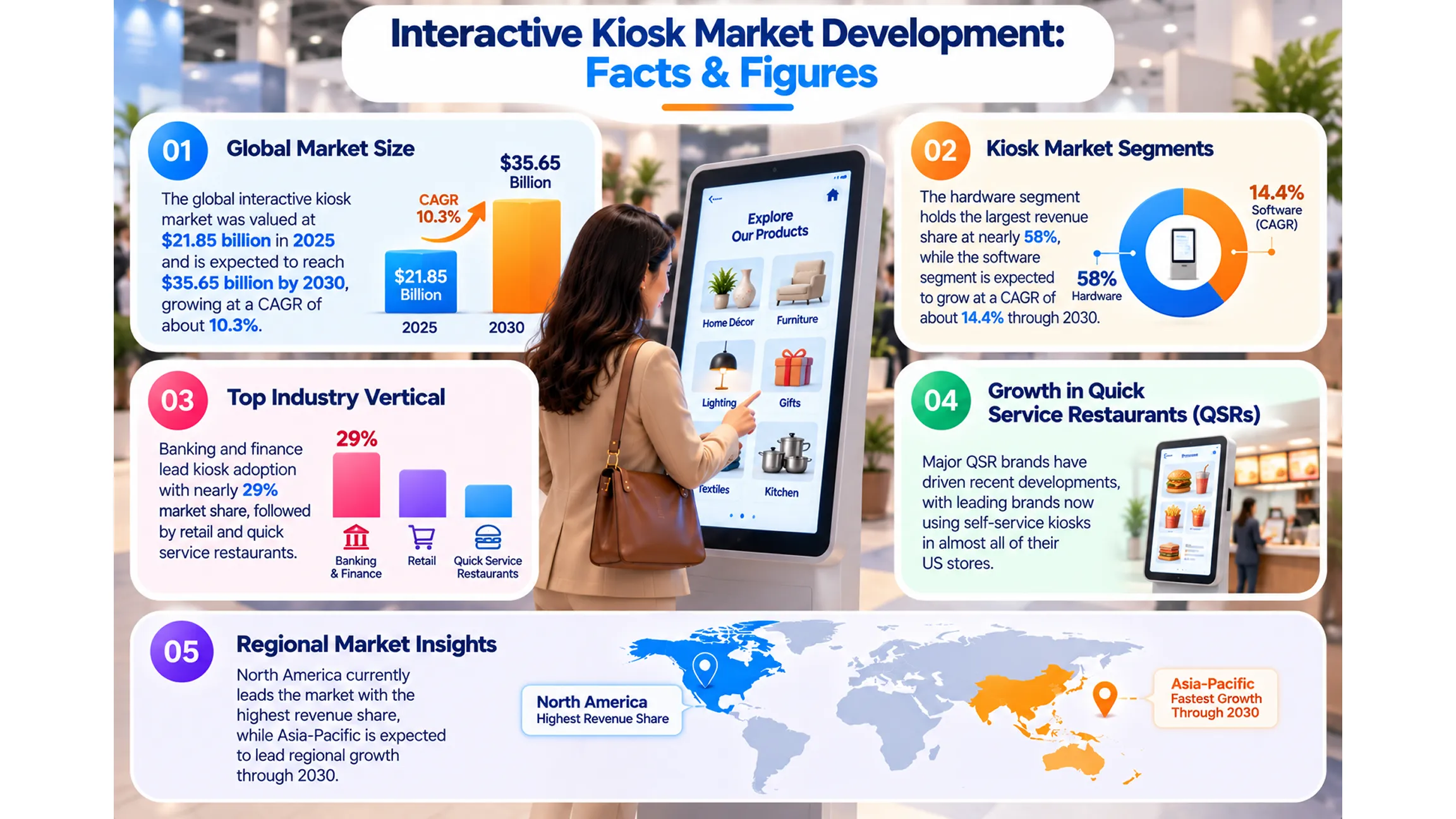
Interactive Kiosk Market Development: Facts & Figures
- The global interactive kiosk market size was estimated at approximately $21.85 billion in 2025 and will be worth an estimated $35.65 billion by 2030, expanding at a CAGR of about 10.3%.
- Among the total self-service kiosk market segments, the hardware segment retains the largest revenue share, amounting to nearly 58%, whereas software will grow at a CAGR of about 14.4% through 2030.
- The banking and finance industry dominated vertical segments for kiosk adoption with nearly 29% market share, trailed by the retail and quick service restaurants sector.
- The major players in QSRs have propelled many of the latest developments, such that certain leading brands operate self-service kiosks in almost all of their US stores.
- North America presently leads the market in terms of regions with the highest revenue share, whereas Asia-Pacific will lead regional growth through 2030.
Abhiwan Technology: Custom Interactive Kiosk Solutions
Abhiwan Technology was formed in 2018 and specializes in custom-designed and built kiosk solutions ranging from check-out flow systems to interactive information kiosk systems designed for lobbies and retail stores, along with event touch screen displays. In-house experts in design, development, and quality assurance handle the whole process from choosing the right hardware to integrating it with existing business systems via software.
Since the studio develops in the AR/VR and gamified experience space, it has the capability to offer business owners a kiosk that is not only equipped with a simple menu system but also a full-scale product configurator on top of that. Each build is customized according to the particular business's transaction volume and requirements rather than following a generic plan.
How Much Does a Self-Service Kiosk Cost?
The price of hardware might start at roughly $2,000 – $5,000 for an entry-level interactive information kiosk and go up to $10,000 – $20,000+ for a robust model that is built to withstand conditions with top-class hardware outdoors. The price of the software will be added to the base price and will depend on the features needed and might vary from $5,000 to $20,000+, depending on the level of complexity and custom development required. Customized solutions with POS or CRM integration might cost $20,000 – $50,000+ and even more if there are multiple kiosks in a business. Maintenance costs must be taken into account, as a company may need an additional contract for software updates and maintenance of the hardware, technical assistance, and regular visits for fixing any issues. For a small setup, the cost of the maintenance might be about $1,000 - $5,000 per year, whereas more kiosks mean a greater maintenance budget.
What Software Is Best for Interactive Kiosks?
There is no universal interactive kiosk software platform suitable for all types of companies because it depends on the transactions that the kiosk should perform. Pre-configured software may fit companies that require only simple functions from the kiosk, like wayfinding or data search, and have no need for customization. However, it is better to develop custom software when there is a need for connection with a particular POS system, multi-step transactions, or following company requirements. The use of a pre-configured platform in such situations may be complicated because of a lack of necessary features. Therefore, the system will require additional adjustments that will complicate further maintenance and development.
Conclusion
Interactive kiosk development offers a business a realistic way to shorten the waiting time, relieve its personnel, and gain valuable operational information, but only when the build is planned correctly, taking into consideration the transaction needs of a business. The proper method varies depending on the scale: a single-location pilot project can be done with the use of template software, whereas a large rollout will most likely need a custom build with more advanced integration. Abhiwan Technology is there to help with both options, planning hardware and software according to the exact needs of the project. Prior to starting the budgeting process, one should get an estimate of all the hardware, software, development, and maintenance costs involved.
Written By Vaibhav Karanwal