Augmented Reality Services have ceased being a budget-friendly demonstration project for companies with extra budget in 2026 and have become an effective approach to reducing returns, streamlining learning, and accelerating sales processes. A customer can try placing a sofa in their living room, a mechanic can follow repair steps overlaid on the object in question, and a customer can walk through an unbuilt apartment using a phone. Abhiwan Technology provides Augmented Reality Services in retail, health care, education, manufacturing, real estate, training, and marketing sectors. This guide describes the reasons why augmented reality services are necessary, which problems they address, and what should be known when hiring a provider.
What are Augmented Reality Services?
AR technology displays digital objects, labels, and instructions over the physical world through a phone camera or headset and requires specific expertise to build one that tracks accurately. An augmented reality development company usually creates 3D assets, ensures spatial tracking works correctly, and conducts cross-platform testing, delivering an operational solution rather than a fragile prototype.
A lot of companies begin by partnering with an AR app development company to develop a single mobile application, such as a product viewer or a try-before-you-buy option, before going further to develop their training, marketing, or event applications. Focusing on one thing helps keep costs and risks low until the company understands how employees or customers really use their apps.
The technical challenge of augmented reality app development lies in anchoring digital content to real surfaces through different phone models and lighting conditions, along with varying levels of tracking. ARKit and ARCore take care of much of the complexity in augmented reality services, but it's actual device testing that makes or breaks an experience.
Why Augmented Reality Services are Important for Companies
Augmented Reality Services justify themselves when they address a tangible business need and not just look cool, and there are only a few use cases that deliver the best results.
Fewer returns and increased conversion in retail
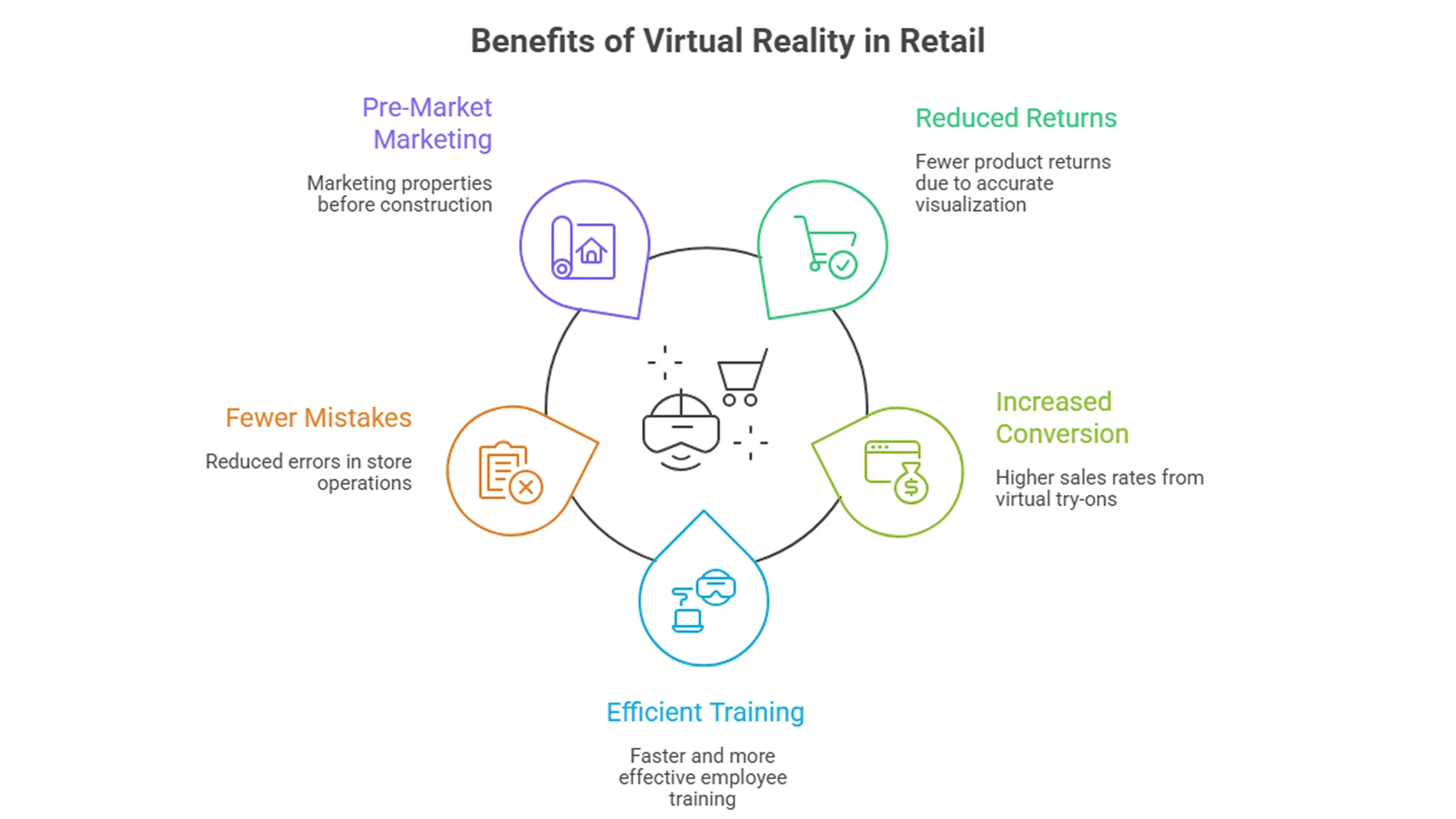
Augmented Reality Services enable customers to see the product in three dimensions, manipulate it, and visualize it within their own space before making the purchase. This solves the problem of indecisiveness that leads to cart abandonment and size/fit returns, which is why early adopters of the technology included furniture, decoration, and apparel companies.
Faster and more efficient training
With the help of a training app created by an augmented reality development company, one can have step-by-step guides overlaid directly on top of the real machine, eliminating the need for a printed manual. Trainees become proficient faster, and expensive errors happen while working with an overlay instead of actual machinery.
More effective campaigns and events
Interactive AR stations placed at a booth or event engage people longer than any poster or video can and provide augmented reality app development services that will enable marketers to track and measure the engagement. As stated on Abhiwan's AR page, one of the marketing directors in the UK experienced doubling the number of booth visitors compared to last year.
Fewer trips and fewer mistakes on the ground
The technician is able to see real-time data and guided overlays on machinery, or seek remote assistance from another expert viewing the same image. Consequently, there will be fewer repeat visits and fewer repair mistakes, hence the industrial investments in the technology.
Marketing real estate before its existence
The buyer is able to furnish, evaluate finishes, and navigate through the floor plan of the house before any construction or staging is even done. The agent gets his job done faster and remotely.
Augmented Reality Services: Facts & figures
- Augmented Reality Services belong to a market valued by Mordor Intelligence at approximately $125.11 billion in 2026, growing at a rate of 25.35% CAGR, reaching $387.23 billion by 2031. Various research companies give different definitions of the market, resulting in various published estimations.
- IDC estimated 2.25 million shipments of display-less smart glasses in Q1 2026, which is a 167% increase year over year, proving that AR hardware is no longer limited to smartphones.
- The largest enterprise AR application is remote assistance and collaboration, making up about 27% of the market according to Mordor Intelligence.
Augmented Reality Services Provided by Abhiwan Technology
Abhiwan Technology, established in 2018, creates augmented reality (AR) experiences aimed at assisting organizations in presenting their products, attracting customers' attention, and increasing the interactivity of the information provided. The AR solutions of Abhiwan Technology can be used in applications related to 3D product visualization, interactive campaigns, or immersive brand experiences. In accordance with the needs of particular projects, such experiences may be created for the mobile platform and other suitable platforms. No matter what stage of the process is considered, from the creation of 3D assets to implementation and testing of AR features, all efforts are oriented towards the development of experiences useful for organizations in their work.
What is the difference between AR and VR?
Augmented Reality Services overlay digital data onto the actual world via the smartphone camera, tablet, smart glasses, or headset. While using AR, people can perceive their surroundings and interact with the virtual elements at the same time, which allows for using AR services for visualization of products, navigation, retailing, educational purposes, and marketing campaigns. The full immersion in the virtual world provided by the use of the VR headset is typical for virtual reality, thus making VR services more suitable for dangerous scenario training, virtual tours, and simulations. Augmented reality is much easier to implement since AR applications can work on people's existing devices, while VR technology requires additional hardware. Mixed reality offers features of both technologies in that it allows digital objects to perceive the physical world.
How is AR different from AI?
AR and artificial intelligence are designed to deal with distinct challenges, although they can complement each other to design a more advanced augmented reality experience. AR is concerned with presenting and interacting with digital content in the real-world environment, whereas AI allows software to process data, spot patterns, understand the input, and make decisions. Thus, for instance, an AR application may display information related to a machine on the screen of a mobile device or smart glasses. Artificial intelligence would be able to spot the machine part using a camera and figure out the information to show. The label or the description that is displayed over the physical object is an augmented reality feature. It is quite common in Augmented Reality Services such as training, retail, manufacturing, and product visualization.
Conclusion
Augmented Reality Services are significant in 2026 because they not only can solve business issues but also create interactive experiences for customers and employees. One of the main advantages of using AR in a business is the possibility to decrease the number of product returns with the help of visualization, conduct effective training programs using visual overlays, assist salespeople during negotiations through interactive demonstrations, and even organize events and marketing campaigns with AR. The most successful AR services normally have a single purpose and not too many features in their concept. It can also be helpful to test the experience using devices and participants to avoid any potential usability problems later on. The services of Abhiwan Technology can provide the creation of AR experiences according to the requirements, such as product viewers, training applications, marketing campaigns, and others. To select a company that will develop an AR experience, one should analyze similar projects, find out which platforms and devices they work on, and decide what metrics will be used to define success.
Written By Charu Sharma