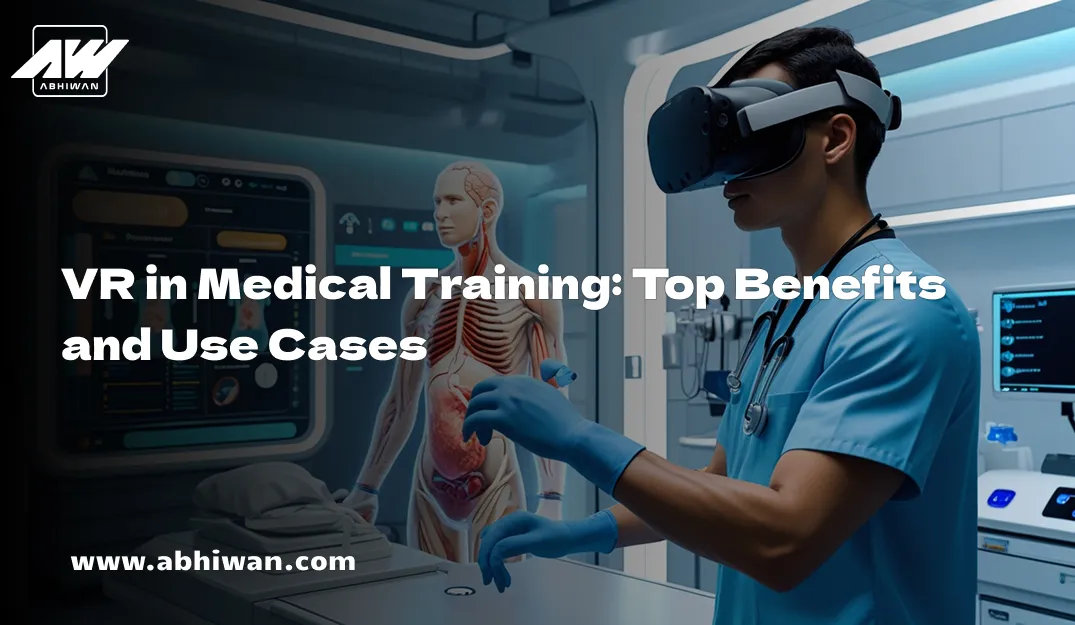
Medical education is going digital, and VR in medical training is among the biggest disruptions in this scenario. VR brings realistic learning scenarios to medical students and professionals so that they may practice the skills safely prior to applying them to real patients. An article published in the Times of India dated June 2025 states that reputed medical colleges such as AIIMS and KEM Hospital have started implementing VR modules in their regular curriculum. It is in step with India's burgeoning thrust towards digital healthcare. Training through VR is helping these students learn faster, make fewer errors, and obtain real virtual experience. Let's explore how VR is transforming medical training today.
VR Medical Training Software Is Changing Medical Learning
With the help of VR medical training, a hospital and surgery room are created virtually. Here, students diagnose patients, give injections, and perform operations. They may repeat this process until perfection, eliminating the fear of hurting an actual patient. A private medical college in Pune decided to incorporate VR software for training students on basic emergency procedures. According to a second-year student, “Earlier, we only watched videos or practised once on a dummy. Now with VR, we keep practising till we’re confident.” Such experience is what gives VR medical training software the advanced in healthcare education.
VR in Medical Training for Students: Practice Without Real-World Risk
VR for medical students practising through it may perform difficult tasks under a no-risk condition; for example, they may practice stitching wounds or performing cardiac arrest, while many hospitals these days insist that their interns be trained in VR before approaching patients. Since 2024, Max Healthcare has started providing VR CPR and surgery modules to its fresh recruits. The trained ones reportedly perform 25% better in actual surgeries. Let’s explore through tabular data how VR learning compares to traditional training.
Traditional vs VR Medical Training
VR-based training gives more freedom and safety to learners compared to traditional methods.
| Aspect | Traditional Training | VR-Based Training |
|---|---|---|
| Practice Opportunities | Limited and often available only in labs | Practice anytime with no limits in a virtual setup |
| Patient Safety | Risk of errors when students move to real patients | No risk at all, students learn without real-world harm |
| Learning Speed | Slower, as repetition is limited | Faster, thanks to unlimited, hands-on virtual sessions |
| Availability | Depends on the schedule, space, and instructors | Available 24/7 with a VR headset and software |
| Cost Over Time | Ongoing cost for labs, tools, and models | One-time setup cost, then long-term savings |
Virtual R Medical Simulation and Training for Professionals
VR medical simulation and training are used widely to train doctors, nurses, and technicians. Hospital teams prepare for surgeries or emergencies using VR without any risk to actual lives. By implementing virtual reality trauma training for emergency personnel, Apollo Hospitals in Chennai was able to improve responses by 30% and significantly lower trauma care errors. Professionals can regain confidence, adopt new methods, and brush up on their skills in a safe and regulated setting with these simulations.
Use Cases of VR in Medical Training
There are many situations where VR adds value to medical education. From surgeries to communication skills, VR prepares learners for real-world medical settings.
Common Use Cases for VR in Healthcare Training
These practical applications are becoming more common in hospitals and medical schools.
| Use Case | Description |
|---|---|
| Surgery Simulations | Helps practice full operations virtually |
| Emergency Response | Trains for accident scenes and life-saving actions |
| Anatomy Visualization | 3D organ and system study without cadavers |
| Doctor-Patient Dialogue | Enhances soft skills and communication |
| Rehab & Physical Therapy | Guides patients through movements and recovery |
Each of these uses plays an important role in making training more complete and effective.
Trending News: VR for Health Crisis Preparedness
In May 2025, a Nipah virus outbreak occurred in Kerala. As a result of emergency interventions, the state engaged more than 300 health workers and trainees in virtual reality courses concerning ICU protocol, PPE handling, and patient isolation. This quick, safe training using VR helped prevent the virus from spreading further. It’s a clear look at what the future of VR in healthcare is: fast, efficient, and scalable training, especially during health emergencies.
Real-Life Example: A Surgeon’s Experience
At Laparoscopic Surgeon Clinic in Mumbai, Dr. Neha Jain started using VR for training her junior team in 2023. They performed gallbladder removals and appendectomies in VR before taking them onto real patients. This shows how VR is not just for students, but also for professionals looking to improve their precision and speed.
What is the Benefit of Using VR in Medical Training?
VR makes medical training more practical by allowing learners to practice without risk. Using VR medical training software, students and professionals can enter virtual environments that feel real. They can perform surgeries, respond to emergencies, and learn through action.
Key benefits include:
- Safe learning without risking patient lives
- Repeatable practice sessions
- Better understanding of complex topics
- Instant feedback for faster improvement
- Cost-effective training method
- Boosts confidence in real situations
By using VR, medical training becomes more hands-on, engaging, and useful for real-world preparation.
What Is the Future of VR in Healthcare?
As hardware becomes cheaper and internet speeds increase, VR will become a regular part of medical education, even in rural areas.
Here’s what we can expect soon:
- Smart VR with AI – Performance-based customised feedback.
- Remote VR Training – Access from any part of the country
- VR Mental Health Therapy – Used to treat anxiety, phobias, and PTSD.
- Collaboration via VR – Surgeons can co-learn and operate virtually
With companies like Osso VR and India’s own MediSim VR investing in this space, the adoption is only expected to grow. Both educators and VR for medical students have a bright future ahead of them.
Conclusion
Virtual reality is quickly becoming a tool for medical training and the fastest pathway to impart knowledge and skills to students and healthcare professionals. It is meant to give some real-world practice with the fear of error with actual patients. Skill development in a realistic virtual environment happens with all procedural learnings being repeated, and feedback is also generated automatically. Long-term training costs get lower, and medical staff get better prepared for emergencies. Growing day by day, hospitals and colleges are increasingly evolving into use cases of VR in medical training to teach the doctors and nurses of tomorrow. It's a smart, modern way to make medical education more effective and future-ready.
Written By Pratibha Srivastava