Character artist 3D professionals utilize their imagination and artistry along with technology to create realistic characters. These professionals handle different aspects of modeling, sculpting, texturing, optimizing, and presenting in order to create assets that are not only visually appealing but also ready to use in the process. However, working on the creation of characters is not only about making things look good. It is of paramount importance to have an in-depth understanding of anatomy, proportions, textures, topology, expressions, and technical requirements applicable to the platform. The advancement of artistic skills is dictated by the knowledge of the right amount of detail to be added to the character design. The techniques used by the artists in this process are common for various areas of character design, including gaming, animation, and films.
What does a 3D character artist do?
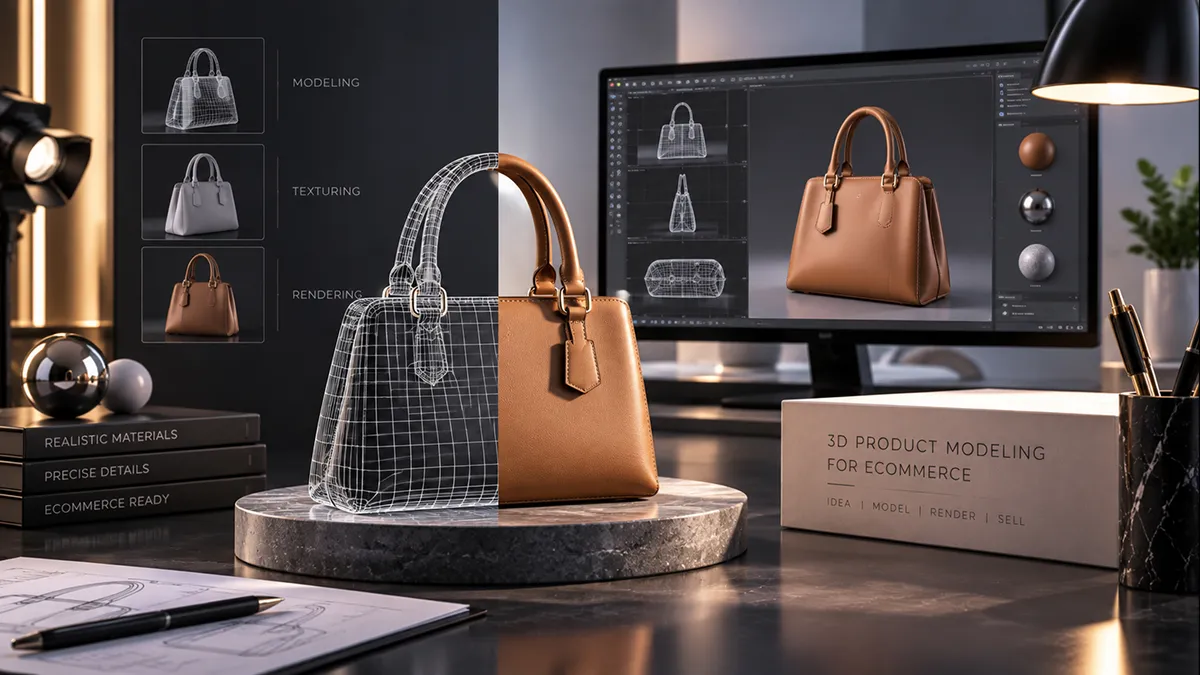
A 3D character artist makes the digital models by changing the original designs, drawings, or creative ideas into a detailed 3D model. They can do blocking, sculpting, retopology, UV mapping, texturing, preparing assets for animation, and real-time use. The artists need to consider the level of detail vs. technical limitations for the characters in terms of aesthetics. For 3D character art for games, the artist must balance visual detail with technical limitations. A character may look impressive in a high-resolution sculpt, but it also needs efficient geometry and textures before entering a game engine. This is why professionals use a combination of artistic knowledge and character artist 3D software throughout the production process. The role also involves studying anatomy, facial structure, fabric behavior, and surface materials. Depending on the project, artists may work with Blender, ZBrush, Maya, Substance 3D Painter, Marvelous Designer, or Unreal Engine. Each tool serves a particular purpose, but the artist's decisions ultimately determine how convincing the final character looks.
10 Techniques Used by a Professional 3D Character Artist
Professional character creation follows a structured process where each stage solves a specific visual or technical challenge. The following techniques help artists build characters that are detailed, believable, and production-ready.
1. Reference-Based Planning
3D artists must gather reference images of the human body, clothing, hairstyle, materials, face features, and accessories before developing models. A 3D character artist looks at many references to determine proportions and surface details of the model. This is necessary in order to achieve clear visual directions and avoid errors.
2. Strong Silhouette and Blockout
Artists begin with basic shapes to define the proportions and pose of the character. This technique allows the 3D character artist to locate any structural issues prior to model detailing. Accurate blockout also simplifies the revision process.
3. Anatomical Sculpting
Artists analyze human anatomy to acquire knowledge of muscles, bones, joints, and positions of the face before adding the finer details. Using modern character artist 3D software, artists proceed from basic shapes to secondary and third objects forms.
4. Clean Retopology
Artists create a simplified mesh with retopology, as high-resolution sculpts often consist of excessive geometry, and controlled edge loops outline important shapes, such as the mouth, eyes, knees, and shoulders. Clean topology in 3D character art for games ensures optimised deformation of the character.
5. Efficient UV Mapping
To ensure the correct texture assignment process, UV mapping enables the artist to create a 2D layout from a 3D model. To achieve that, the artist needs to pay attention while creating seams, offering greater surface area where texture would be visible.
6. Detailed PBR Texturing
Artists create texture maps that define material properties in relation to variations in lighting. For 3D character art for games, textures must be able to respond to different lighting conditions realistically. Skin, leather, cloth, and metal therefore require different surface properties and subtle variations.
7. Hair and Clothing Detailing
Hair and clothing can have a huge impact on a character's personality and realism. Artists examine everything from folds of fabric, seams, layering, hair directions, and how materials act when working through their character artist 3D software pipeline. In the case of game assets, artists pay attention to geometry and hair density to avoid performance issues while rendering.
8. Facial Expression and Deformation
Characters should convincingly express themselves while talking, smiling, scowling, or striking different postures. Artists create the appropriate topology around the eyes, mouth, and cheeks to help with the deformations. A 3D character artist checks these parameters early on so that any problems can be fixed before animation and rigging processes begin.
9. Game-Ready Optimization
Artists eliminate excessive geometry, optimize textures, and generate the required levels of detail before handing over the final asset. This is of critical importance for 3D character art for games, when many characters may appear on the screen at the same time. A good artist can balance visual quality with technical limitations of the target platform.
10. Engine Testing and Presentation
The last stage of verification occurs when the artist imports the completed model into the rendering engine. A character artist 3D may use Unreal Engine or any similar real-time system for the last verification stage. Conducting tests in a real situation can uncover problems that are hard to identify in modeling software.
Why These Techniques Matter in Modern Character Creation
A robust workflow for character design is linked in an interconnected manner by all stages of the creative process. The impact of a proportion decision during the blockout process can be seen later on in sculpting, and the same goes for the technology choice, which would determine how well the animation must be done. Furthermore, UV mapping can directly affect the quality of the texture. Such an approach is extremely useful for the 3D character artist because, with all parts connected, one can maintain the quality throughout production. This is particularly relevant in 3D character art for games, where quality and performance are at odds with each other. While at some parts and scenes the character might be presented with its finer details, it would still seem efficient when mass production is concerned.
Key Factors That Define High-Quality 3D Character Art
A strong character is judged by more than the number of details included in the model. Professional artists consider how well the character communicates its identity, maintains visual consistency, and performs within its intended environment. These factors help distinguish a polished production asset from a model that only looks impressive in a still image.
Anatomical Accuracy
When creating a character, you have to allow enough thought to be invested into the body, the joint arrangement, and the facial structure. Even if the character is stylized, the knowledge of anatomy will allow a good understanding of the character's background. The 3D character artist takes all of that knowledge and uses it to create intentional exaggerations.
Visual Consistency
All elements of the characters are to follow one visual principle. If the character's face and clothing don't follow the same approach, it will be regarded as inconsistent. This is most important when there is an established style or game world and 3D character art in accordance with it.
Material Realism
The materials used for the character must reflect the surface's true nature. The skin or metal will affect the approach taken to creating a character. The knowledge of proper character artist 3D software making allows you to do that without making the character too elaborate.
Animation Readiness
A character meant for animation needs a geometry that is able to bend and twist as required in movement and active expressions. Particular care should be given everywhere motions take place, like joints or facial expressions, to ensure they do not get distorted or crushed. A 3D character artist, therefore, should take into account the requirements for animation before completing the model.
Technical Optimization
The quality also depends on how the character is able to function on its target hardware. The count of polygons, chosen sizes of textures, LODs, and complexity of materials all influence efficiency and quality. When it comes to 3D character art for games, optimization ensures the perfect combination of quality and performance.
Character Personality
An interesting character should say something on its own in terms of personality and emotions depending on the shape, movement, costume, and other elements of design. All these components should give rise to a recognizable character. Even within a technical character artist 3D software pipeline, creative decisions remain central to building a distinctive identity.
How to become a 3D character artist?
To be a successful 3D character artist, one must have a solid grasp of drawing basics, including anatomy, proportions, perspective, and basic 3D modeling techniques. Once the basics are mastered, the next step is to learn about digital sculpting, retopology, UV mapping, texturing, and basic rendering techniques. The use of digital tools such as Blender, ZBrush, Maya, and Substance 3D Painter is essential for grasping the different stages of a professional workflow. It is also advisable to start by imitating simple characters from references and to gradually expand the artist's repertoire to more challenging designs. Most importantly, one should focus on making personal works instead of relying on tutorials only. The developed portfolio with already completed works (characters, wireframes, textures, and steps of development) will show both the creative abilities of the artist as well as his/her technical knowledge of the field.
Is 3D art difficult?
It can be quite challenging to start with the art of 3D because this art encompasses various technical and artistic components. What it means is that modeling, sculpting, topology, UV mapping, texturing, lighting, rendering, and animation require a good deal of practice. Nevertheless, the learning process can be simplified if one acquires the various skills gradually rather than trying to acquire all of them at once. This means that it is better for a novice to start with simple objects and basic characters and to move on to more complicated human body figures or production objects thereafter. Regular practice together with studying professional examples of 3D art and analyzing one’s own mistakes will help improve both speed and precision of work with time.
Conclusion
Creating a successful 3D character requires the talents of a professional character artist 3D. These are the traits that are necessary for a professional artist to possess: creativity, technical knowledge, sense of observation, and production discipline. Reference planning, blockout, anatomical sculpting, retopology, UV mapping, PBR texturing, clothing detailing, deformation, optimization, and engine testing are some of the techniques that ensure the success of 3D character artist. These techniques are vital in ensuring that the end product is an attractive model that also performs well within the context of the project. Of particular importance is the creation of 3D character art for games: they need to have a great look and animation and also fulfill their functions in real-time computing processes. The introduction of modern character artist 3D software has made many stages of the creative process faster and allowed some flexibility in terms of implementation.
Written By Charu Sharma