The services of 3d medical animation studio are reshaping the way healthcare institutions present complex anatomy, procedures, devices, and treatment processes more easily and compellingly. The hype for these visuals will grow by 2026, and they will be used in medical education, patient communication, drug presentations, and healthcare education. The list that follows includes the noteworthy studios that offer advanced medical/scientific/3D visualization services. The list is created based on publicly available information about the companies, services, and portfolios. Healthcare organizations must also take into account the scientific accuracy of the visuals, the level of expertise on the subject, the production process, and the target audience when selecting a provider.
What is 3D Medical Animation?
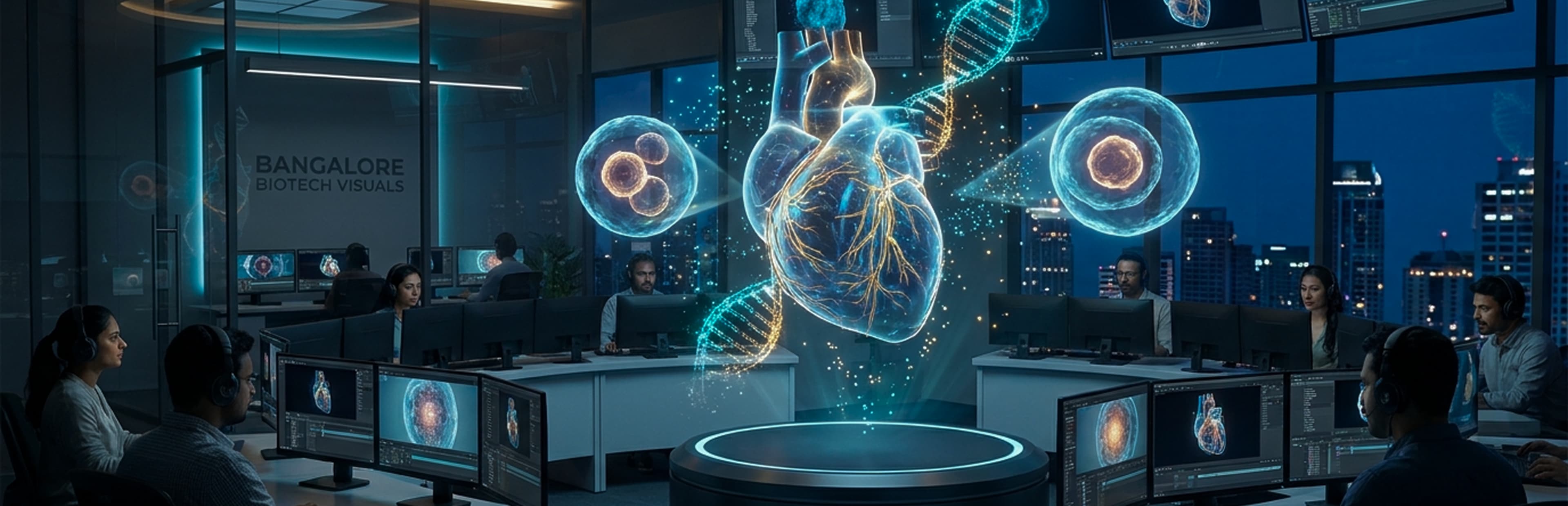
3D medical animation uses computer-generated images, simulation, texture, light, and visual effects to illustrate biological structures or processes occurring in the field of medicine. The principle of illustrating processes or objects from the medical industry using 3D medical animation has several advantages in comparison to traditional techniques: the information can be provided in a more articulated way compared to how it can be done with the use of regular footage and other means. What sets a medical animation studio apart from regular animation is that healthcare visualization requires extra attention paid to scientific details; therefore, a medical animation studio needs to work with lots of people: medical references, authors and illustrators, and other professionals specializing in medicine. A medical 3d animation company creates videos for various audiences, and the level of detail will depend on the purpose of the project and the audience that is supposed to watch it.
Why Healthcare Uses 3D Medical Animation
Healthcare information can be difficult to understand when it relies only on technical terminology, photographs, or static diagrams. 3D visualization provides another way to present the same information by showing movement, depth, scale, and internal structures.
Patient Education
Animations may facilitate the understanding of complex processes, conditions, and treatment procedures by the patient. By visualizing the process, patients may comprehend some medical terms that are confusing for them.
Medical Training
Potential students and experienced medical experts can benefit from 3D models to analyze the anatomy as well as the processes involved in any medical procedure. This approach can help with the educational process.
Pharmaceutical Communication
The process of drug functioning and biological processes usually involves contacts that are too complicated to be captured on camera. Accordingly, the process of animation ensures understanding of the most complicated processes.
Medical Devices
In many cases, the process of revealing how a device works can be quite complicated. However, 3D animation allows showing the interactions and movements of separate elements of any device.
Scientific Visualization
Research-based subjects often demonstrate activity at the microscopic or molecular level, and 3D animation can transform this complex information into a sequence of visual images that can impart understanding of relationships.
Current Healthcare Animation Trends
Healthcare visualization is progressively becoming interactive and immersive. In April 2026, AIIMS New Delhi introduced a VR training centre for the purpose of supporting education in the medical and nursing fields, which underlines the increasing use of immersive technologies in medical education. And this trend goes beyond VR only. Healthcare organizations investigate AR, interactive anatomy models, simulations, and other technologies. Thus, nowadays the projects of 3d medical animation studio can serve more than one video. That allows organizations to create sets of assets that can be used in presentations, training programmes, and even interactive applications. However, the aim of these technologies should be scientific rather than technical.
Top 10 3D Medical Animation Studio in India 2026
The studios below are presented based on their publicly stated 3d medical animation studio relevance to medical, scientific, healthcare, or 3D visualization work.
1. Abhiwan Technology
Abhiwan Technology is a medical 3d animation company, including 3D modeling, animation, visualization, and interactivity. It is capable of handling larger healthcare projects using medical devices, educational materials, and custom 3D content. As a 3d medical animation studio, it should be noted that its scope of work can be useful for healthcare visualization projects where custom productions are needed.
2. 3DLabz
3DLabz is a company that specializes in 3d medical animation for healthcare, pharmaceutical, biotechnology companies, medical devices, and educational organizations. Its focus is on mechanism-of-action videos in addition to surgical animations, medical-device visualizations, and patient education. The company has experience in the area of medical visualizations for complicated healthcare matters.
3. EFFE Animation
EFFE Animation is a specialized studio dedicated to producing medical animations that cover topics such as anatomy, surgical procedures, and the incidence of diseases through the functioning of certain medical devices and microscopic biological phenomena. The medical animation studio aims to produce medical animations for healthcare education, medical training, and communication purposes. The services offered by the studio combine advanced medical knowledge and sophisticated 3D storytelling.
4. ERemedium
ERemedium is another studio that specializes in creating medical animations that describe surgery-related medical actions, procedures, and diseases. The created videos are expected to be used in healthcare education as a part of communications and can also be used by patients in clinical settings. The main goal of the studio is to make the complex language related to medicine understandable for both patients and healthcare professionals.
5. InfuseMed
InfuseMed produces medical animation for various medical businesses, including those dealing with devices and pharmaceuticals. The main types of animation include explanations of device functions, processes in the body, and microscopic processes. The studio also provides coaching services through the use of modern technologies.
6. Geometric Medical
Geometric Medical is a medical 3d animation company using modern technology. Their services range from 3D animations and simulations to augmented reality and interactive content. The company is involved in projects in pharmaceutical, biotechnology, medical devices, and other industries.
7. DG Medical Animations
DG Medical Animations specializes in scientific and medical animation and visualization for healthcare, pharmaceuticals, and medical devices. Its services include product demonstration and patient education, as well as scientific and surgical imagery. The company has a reputation for completing complex projects in the medical field that require in-depth knowledge of patients, medical procedures, and technology.
8. 3DforScience
3DforScience aims to provide scientific and medical visualizations in healthcare. The company specializes in many subjects, including surgery and drug production. 3DforScience combines scientific knowledge with modern technologies to make complex topics easier to understand.
9. BioDigital
BioDigital is known for its interactive 3D visualization of human anatomy, disease, and healthcare concepts. The company's platform uses digital models to deliver medical teaching, patient communication, and healthcare education. BioDigital differs from ordinary firms in the field of medical 3D animation company that mainly rely on linear video production.
10. Nanobot Medical
Nanobot Medical specializes in scientific visualization and is one of the top 3d medical animation studio for pharmaceutical, biotech, medical device companies and healthcare audiences. The studio works on actions and mechanisms of diseases, communication with patients, and medical education. The firm puts together scientific ideas and high-quality visualization.
How much do 3 minutes of animation cost?
The price of three minutes of medical animation will depend on different factors like how complex an anatomical model is, what kind of model is needed, which style of animation is chosen, whether narration is required or not, how good the quality of rendering is, and many others. Usually, the price ranges from $3,000 to $15,000 per minute (or $9,000-45,000 for a three-minute video). While the creation of a straightforward educational video may entail less work, an in-depth surgical or molecular video will call for considerable academic research and producing hundreds of custom 3D models. This means that medical facilities must compare bids, keeping in mind the scope of work and deliverables.
How to create 3D medical animation videos?
Usually, the process of producing animated medical images starts with doing research in medicine, writing the script, and creating a storyboard. Once the process is approved, the artists create 3D anatomical models of products, add texture to them, animate them, and render them. Editing, voiceover, sound design, and scientific review comprise the final stage of the workflow. Collaborating with a specific medical animation studio that produces animated medical films will ensure that the medical information visualized in the animation is consistent with the content.
Conclusion
Selecting a good 3d medical animation studio involves combining scientific credibility with visual excellence, proper communication, and production skills. The studios mentioned in this list represent different styles, from specialized medical visualization to interactive anatomy and other 3D technologies. A healthcare organization needs to consider portfolios, scientific processes, technical abilities, estimation of time, and project specifications before making its choice. Since both medical studies and digital healthcare are open to immersive technologies, the services of a medical 3D animation company are expected to gain importance in training, communication between doctors and patients, product demonstration, and medical teaching. The most successful jobs will combine technological progress with effective medical communication.
Written By Charu Sharma