The cost of installing a Digital Fashion Showroom in India ranges from $ 9,000 to over $70,000, depending on aspects like the design, number of products displayed in it, 3D visual quality, interactivity, technology used, etc. A standard digital fashion showroom requires far less investment than a completely customized solution with the best presentation and visualization technologies. The final cost also depends on whether the company wants a simple digital fashion collection, just an online shopping experience, or a comprehensive solution that includes e-commerce. Usually, it makes more sense to understand the customer journey first and then choose the required features rather than spend money on the technology that customers will not use.
What is a Digital Fashion Showroom?
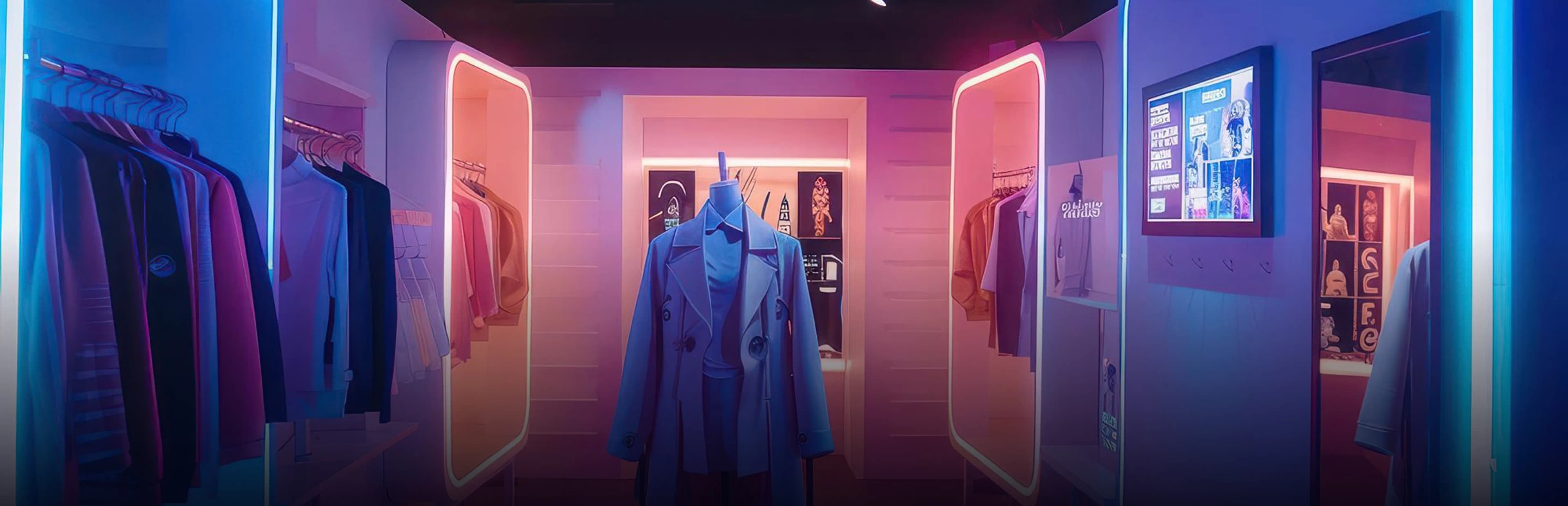
A Virtual Fashion Showroom works as a digital space where consumers can learn about fashion items interactively. Rather than simply viewing the garments through ordinary product pages, users can navigate through the virtual space of the brand, open the products, study their features, and see the supplementary goods. Depending on the needs of the brand, a virtual showroom can range from a simple to a very advanced solution. A 3D virtual showroom uses not only a unique environment, but also photo-realistic products and various kinds of advertisements. The aim of such showrooms is not just to impress customers with online shopping but also to visually and effectively show them the goods they want to purchase.
What Factors Influence the Investment?
The overall budget changes according to the scope of the experience. Five areas usually have the greatest impact on development requirements.
3D Environment
The backdrop serves as the foundation of the experience. While a pre-existing environment requires less effort, designing custom shops, runways, studios, flagship stores, etc., is more labor-intensive as they necessitate modeling, texturing, illumination, motion graphics, or even special effects.
Product Digitization
Prior to populating an interactive environment with garments, an assortment of digital assets must be created. In this instance, the level of work depends on the variety of clothing pieces, the number of fabric types and colors, the presence of accessories, photographs, and a degree of realism.
Interactive Elements
It is significantly easier to design basic product representation than complex interactions. Such features as hotspots, 360-degree product view, facilitated navigation, interactive displays, and motion effects considerably raise both the level of development and the amount of testing needed.
Virtual Try-On
The use of virtual try-on technology may entail numerous technical challenges for brands. Based on the selected method, a virtual try-on platform can operate on computer vision systems, AI-generated graphics or images, body movement tracking technologies, or avatars.
System Integration
Establishing a showroom that works in tandem with one of the existing commerce options requires more planning than creating a separate showroom. Integration of the platform with the product feeds and logistics of the new solution might be needed.
What Is the Typical Price Range?
The final budget depends on how much customization, product digitization, interaction, and integration the project requires. These levels provide a practical idea of what brands may expect when planning a Digital Fashion Showroom.
Basic Experience
The cost of a Digital Fashion Showroom is usually in the range of $9,000-$17,500 when it covers a branded environment, a limited number of products, and includes simple navigation and product details. A basic solution seems to be appropriate for companies testing digital commerce without spending money on sophisticated solutions.
Standard Experience
A conventional Virtual Fashion Showroom costs around $17,500 to $35,000 based on custom factors like the presence of interactive product models, 3D components, analytics, and different commerce integrations that it offers. It allows users to enjoy more flexibility while keeping the focus on the core experience.
Premium Experience
The price of a speciality virtual showroom is about $35,000 to $70,000, depending on the elements of photorealism, immersive environment, detailed product representation, animated visuals, and personalized shopping experience with virtual fitting. The higher price is normally associated with unique content and cutting-edge technologies.
Enterprise Experience
An enterprise 3D virtual showroom may cost $70,000 or more because of the number of collections it accommodates, large product catalogues, multilingual approaches, advanced analytics, as well as CRM and ERP integrations it features.
Ongoing Expenses
Not only is the primary development budget an expense to take into account. Hosting, servicing, new product assets, content updates, third-party services, and technical support costs can pile up after product launch. This has to be accounted for when making long-term investment calculations.
What Features Should a Digital Fashion Showroom Include?
A successful showroom does not need every available technology. The right features should support the customer's shopping journey and provide useful product information.
Interactive Product Viewing
Clients have the opportunity to rotate products, zoom in on details, and observe them from various perspectives. This is especially applicable to fashion goods where fabric, silhouette, stitching, and detailing largely determine customers’ purchase choices.
Digital Styling
Styling tools give clients the ability to mix products with clothes and accessories in coherent outfits. A Virtual showroom provides clients with suggestions about combinations of products depending on color, occasion, collection, or complementary products.
Virtual Try-On
Through the use of Virtual try-on, customers get to see a specific piece of clothing on themselves or some digital depiction of themselves. Virtual Fashion Showroom may leverage this innovation to overcome the traditional drawback of online fashion, which is that customers cannot see how the garment will look before buying.
Guided Discovery
Guided journeys take visitors to freshly introduced collections, seasonal editions, or themed collections. This contributes to the ease of navigation through a large digital space, allowing customers to reach relevant goods without wasting time on browsing.
Multi-Device Access
It is important to make sure that the experience will be available on desktop computers, tablets, and mobile phones. Thus, a 3D virtual showroom must come with optimized assets and responsive interactions in order to sustain good image quality of images without hindering loading speed and usability.
How to Create a Digital Fashion Showroom?
Building a digital showroom requires more than creating an attractive 3D environment. The process should begin with the customer journey, followed by product preparation, experience design, development, integration, and testing.
Define the Target Audience
Begin by determining who the target audience is and what they expect from the experience. There are various types of users, including luxury shoppers, wholesalers, fashion lovers, and everyday customers, and each of these customers will require different levels of navigation and interaction.
Select the Product Collection
Brands do not have to digitize every SKU right at the onset. By opting for only hero products, seasonal products, or only high-value products, the amount of work can be minimized, and a good Digital Fashion Showroom can still be created.
Design the Environment
The digital environment has to support products rather than distract from them. The layout, lighting, placement of the products, and even navigation, branding, and all interaction points must be carefully planned, making sure they are in place before going into the stages of making the project down to details.
Connect Existing Systems
If a situation has to make use of product details, stock availability, pricing, payment, or customer information, these integration prerequisites ought to be determined beforehand. It is also important to connect with current systems since it will enable a Virtual Fashion Showroom to be part of the entire digital shopping experience.
Test Before Launch
Testing is very significant for interactive experiences. A 3d virtual showroom needs to be tested for various browsers, devices, screen sizes, and different network conditions so that customers are able to browse the products effortlessly.
How Is Digital Fashion Retail Changing in India?
India's fashion retail sector is gradually adopting more visual, AI-driven, and personalized shopping experiences. Recent developments show that virtual product visualization is moving from experimental technology toward practical applications for shoppers.
AI-Powered Apparel Try-On
Google launched its virtual Try On feature for apparel in India in December 2025. This feature enables shoppers to upload their photo and view clothes from millions of listings on them, which is made possible by the use of artificial intelligence that takes into account factors like body type and the way the fabric lies on the body.
More Personalized Shopping
The tech giant has recently made strides in enhancing the AI-based shopping experience in India as part of its innovation using Shopping Graph and AI technologies to make shopping more visual and personalized. Several developments indicate the emergence of new techniques for online fashion shopping.
Virtual Trial Rooms
Aditya Birla Fashion and Retail has developed an AI trial room and an AI Fashion Expert utilizing PointAI technology in Mumbai. The development allows customers to virtually test clothes without wearing them.
Growing 3D Adoption
As shoppers become more comfortable with interactive product experiences, brands have more opportunities to use 3D visualization for collections and product storytelling. A 3d virtual showroom can provide an additional layer of engagement beyond conventional product photography.
Focus on Practical Use
The current developments do not imply that all fashion brands should have a complex digital presence. A virtual showroom should be able to tackle a certain issue of the buyer, be it enhancing the visual aspect of the product, facilitating the process of exploring the catalogue, or enabling the customer to make better buying decisions.
How to Create a Digital Showroom?
The first stage in creating a digital showroom is identifying the target audience, business goal, and customer journey. In the next phase, the business picks the collections to show, prepares the digital space, makes 3D product models, and chooses the interactive features to implement. The following development stage brings the technology together with the navigation, product details, analytics, and, if necessary, e-commerce modalities. Before launching the showroom, it is important to test it across different types of devices and network conditions. Following this incremental approach may help brands comprehensively evaluate customers’ behavior before scaling it up.
How Does a Digital Showroom Work?
Digital showrooms are interactive online environments where visitors can gather information about products and utilize other systems related to business processes. Users can enter different sections of the showroom, explore collections and products, obtain information about specifications, and employ interactive features including product rotation, stylist, and virtual try-on. If linked to an e-commerce platform, users can check a product's availability, add it to the cart, and continue to the checkout process. With the help of analyzing the data, brands can see which products have gained the biggest interest from the audience.
Conclusion
There are several factors to consider when calculating the cost of a Digital Fashion Showroom in India. Its design, the product range offered, 3D visual appeal, interactive features involved, and future requirements are all factored in. A simple experience is available for basic projects, while a high-end and sophisticated project can be equipped with options such as virtual try-ons, customization, analytics, and created 3D environments. Besides providing more stimulating product discovery, a Virtual Fashion Showroom also allows for creating a simpler and more interactive shopping experience. For brands that want greater immersion, it is worth investing in a 3D Virtual Showroom with a realistic setting and high-quality items presented in a digital format. In the end, the most effective investment brings together customers’ needs, usability, visual quality, technical requirements, and perspectives.
Written By Charu Sharma