Manufacturing is changing fast. Factories no longer rely on guesswork or slow trial-and-error. Today, the best virtual reality company helps factories think smarter, train better, and build faster. Virtual reality services now help teams design products, train workers, and spot problems before they cost money. So, the global VR in manufacturing market was valued at $6.98 billion in 2025. Moreover, it will grow to $69.16 billion by 2034 at a CAGR of 29.70%. That is a massive jump. Also, Asia-Pacific already leads with 38.60% of that market. Therefore, companies that skip VR now will fall behind fast. Furthermore, the ones investing early are already seeing results in training, design, and production. So, how does VR help factories today? Let us find out.
What Is Smart Manufacturing and Why Does VR Fit In?
Smart manufacturing is the application of technology for making factories more productive, efficient, and intelligent. Employees operate with actual data and software to make more accurate decisions. Despite that, all smart factories still have to deal with an issue of their own. The training of employees on large equipment may be dangerous for everyone present. Also, making the prototype of a factory requires significant financial investments. Testing the design of the factory before building is almost impossible without virtual technologies.
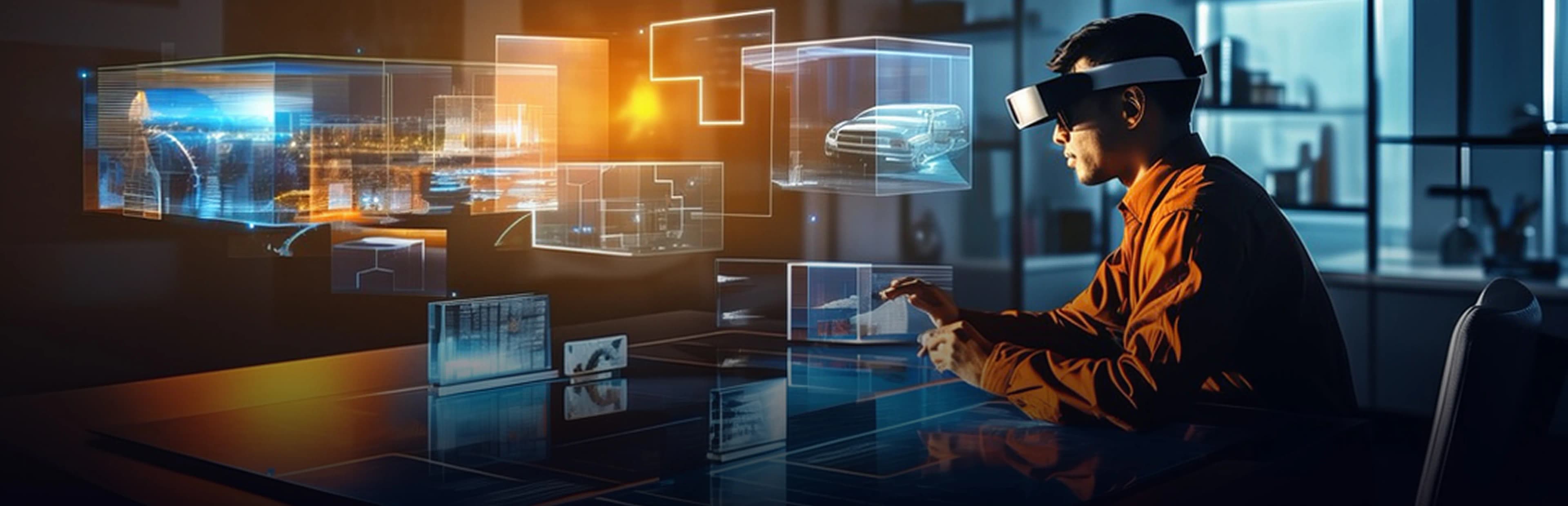
And here come virtual reality services. In them, employees get the opportunity to train, test, and solve issues in the digital model of the factory. None of the participants will get injured. Furthermore, managers will have a chance to understand what works and what does not work in the factory. Thus, VR is more than just a fancy technology. It helps to solve the problems of factories every day.
How the Best Virtual Reality Company Helps Factories Work Smarter
Virtual reality gaming companies do more than build games. Many now build serious tools for factories. These virtual reality gaming companies follow a clear process to deliver results. Here are the five key steps they follow:
Step 1: Virtual Product Design - Engineers step inside a digital version of the product before building it. They check every part for size and function. Hyundai uses this to design new vehicles before touching any real material.
Step 2: Worker Training in a Safe Space - New workers practice dangerous tasks inside a VR environment. They handle virtual machines and repeat steps until they get it right. No one gets hurt, and no equipment goes at risk.
Step 3: Factory Layout Planning - Teams walk through a digital copy of the factory. They test machine positions and find bottlenecks early. Tools like visTable run 3D simulations of complex factory floors inside VR.
Step 4: Remote Collaboration - Engineers from different countries meet inside a virtual factory and work on the same model at the same time. Siemens added this feature to its NX software in 2024.
Step 5: Real-Time Performance Tracking - VR tools show live factory data on virtual machines. Workers see speed, error rates, and alerts. A survey found 75% of industrial companies using VR reported at least 10% better efficiency.
Why Choosing the Right VR Partner Matters
However, not all VR development agencies offer identical outcomes. The best virtual reality company brings industry expertise, technical background, and a proven approach for each task. It is precisely this combination that differentiates a useful virtual reality solution from one gathering dust on some shelf.
Virtual reality gaming companies frequently switch to industrial VR due to the similarity of key competencies required in both areas. Namely, developing a video game and creating a simulation of the factory require 3D modeling, quality engines, and effective user experience design. Nevertheless, industrial VR adds security and precision requirements to the list. The problem in a video game cannot cause any harm. In the case of a factory simulation, however, a mistake will turn into an error in the real world. That is why an ideal partner should be familiar with both domains.
The Future of VR in Manufacturing
Moreover, VR is becoming even smarter every year because AI is used in combination with VR for dynamic training adjustments. For instance, if the employee repeats the same mistake three times, the AI will modify the learning process and provide additional exercises for the same step. Training gets much more personalized and rapid for each worker on the assembly line.
Additionally, the emergence of 5G networks improves VR performance by increasing speed and stability. It plays a crucial role for factories that work with the best virtual reality company on live data projects. Moreover, the Asia-Pacific region has become the fastest-growing VR market, with the annual growth rate exceeding 35% until 2030. Moreover, digital twins have also become an integral part of this future. Thus, the worker can get into a fully functional digital version of the factory, conduct all necessary checks, and resolve any issues before the real production starts. This is exactly where top VR development companies are building their strongest solutions right now.
What Is the Difference Between AR and VR?
Many people mix up AR and VR. Both use digital visuals. However, they work in very different ways. So, it helps to understand each one clearly before choosing the right tool. Augmented Reality adds digital items on top of the real world. For example, a worker wearing AR glasses can still see the real machine while reading virtual instructions. VR, or Virtual Reality, takes the user into a fully digital world. As a result, the real world disappears completely. AR adds to what you see. VR replaces it entirely.
Both tools are useful. However, for deep training and product design, VR is the stronger choice. This is why virtual reality services lean heavily on VR for factory work. This is why the best virtual reality company in any industry focuses so heavily on VR for factory use. Also, the results speak for themselves every time.
What Software Is Used for Developing VR Games?
Good VR starts with the right tools, and the best virtual reality company always picks them carefully. Unity is the most popular engine for VR. It works on many platforms, including Meta Quest and HTC Vive. It saves development time and suits most team sizes. Many VR development companies choose Unity for factory projects. Unreal Engine 5 is another top choice. It creates very realistic graphics and handles millions of tiny scene details. Studios prefer it for high-end training simulations.
Other tools like CryEngine, Blender, and CenarioVR are also common. CenarioVR lets teams build training simulations using drag-and-drop, without heavy coding. For web-based VR, A-Frame works well and needs very little setup. The right tool depends on the project goals, the budget, and the team's skill level. Choosing the wrong tool always slows down the build. That is why experienced VR development companies evaluate every option before starting.
Conclusion
The best virtual reality company does not just sell headsets. Instead, it helps factories think in a completely different way. Workers train without risk. Designers test ideas before spending money. Also, managers catch problems before they grow into costly ones. So, all of this adds up to better results every single day on the factory floor.
Furthermore, the global VR in manufacturing market will reach $69.16 billion by 2034. Therefore, companies that act now will be ready for that future. However, those who wait will spend more time and money catching up later. Smart manufacturing is already here. Moreover, the right VR partner makes it smarter, faster, and far more effective for every team involved. So, the time to act is right now.
Written By Charu Sharma