Technology is changing the healthcare industry. Nowadays, a tool used in hospitals is virtual reality. VR simulation training helps doctors, nurses learn better. They can practice everything through VR. Doctors practice surgeries, nurses learn patient care, and students learn emergencies in a realistic environment. The healthcare sector is the top industry that uses virtual reality. This helps to make the lives of doctors, medical students, and patients easier. Mental health treatment, pain management, and patient care are possible using VR. From identification to treatment, VR technology has a panoramic view application in health. This article will guide you on the simulation and its benefits.
What is VR Simulation Training?
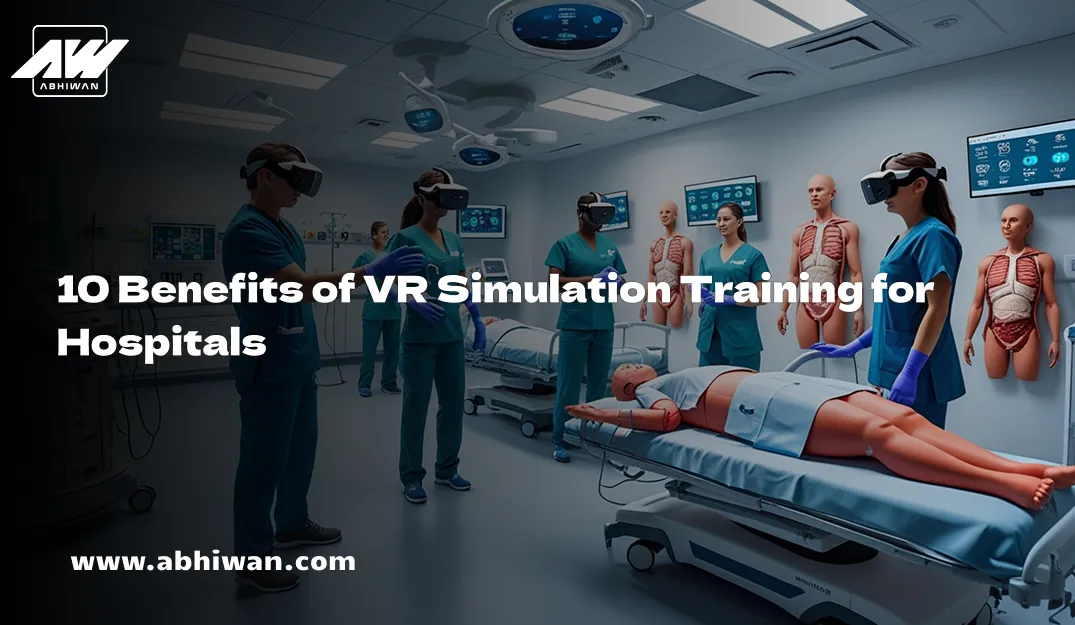
VR simulation uses virtual reality technology to create a 3D world where doctors, nurses and medical students can practice in real life. The simulation looks like real.
This training includes:
- Performing surgery
- Giving injections
- Responding to emergencies
- Handling patient interactions
- Learning anatomy
How VR Simulation Works in Healthcare?
In virtual reality medical simulation, trainees wear a headset to see a 360 virtual environment. They also use controllers to interact with patients or tools. Some systems include haptic feedback, which feels like real physical actions. Trainees follow every step to make decisions and achieve better results. The professional track the progress and gives feedback.
- Headset creates a virtual environment.
- Hand controllers allow interaction with tools and patients.
- Trainees perform surgeries, CPR, or patient care.
- Real-time responses simulate realistic outcomes.
- The system tracks performance and gives instant feedback.
- Instructors monitor progress and guide learners
- Scenarios can be repeated without patient risk.
- Remote access allows training.
Benefits of Virtual Reality Medical Simulation
VR simulations have many benefits:
1. Safe Environment
VR simulation training improves patient safety. In a virtual environment:
- Students can make mistakes without harming anyone.
- They can repeat procedures until they feel confident.
- Risky or rare procedures can be practised many times.
2. Interaction
VR simulations give real-life experiences. Trainees work in the real world.
The virtual environment helps in:
- Practising teamwork with other virtual or real-life users.
- Learning in a stressful but controlled way
- Understanding body reactions in real time.
3. Personalised and Repeatable Training
With VR:
- Every trainee can practice at their own pace.
- They can repeat a procedure as many times as needed.
- Mistakes are recorded, and feedback is given instantly.
4. Better Learning for Nursing Students
Virtual reality simulation in nursing is more popular.
Nursing students can:
- Practice IVs, taking vital signs, or performing CPR.
- Learn how to communicate with patients
- Prepare for real hospital shifts with virtual patient cases.
5. Training for Rare or Emergency Situations
Some medical events are critical, like:
- Birth complications
- Heart attacks
- Mass casualties
- Brain surgeries
With VR, hospitals can simulate these situations.
6. Cost-Effective
VR systems are expensive at first, but they save money over time.
- Expensive models do not necessarily
- Take less cost for physical training space.
- Repeatable training without buying new materials.
7. Remote Training for Rural or Global Hospitals
Every hospital can’t afford to send staff to big cities for training.
VR makes it possible to:
- Train remotely.
- Access to rural hospitals.
- Reach communities and reduce health inequalities.
8. Tracking and Assessment
VR software tracks student activities:
- How they respond
- What decisions do they make
- Follow safety procedures
Professionalism can:
- track real-time or later
- Give feedback
- Score performance.
- Assign practice
9. Boosts Confidence
Medical students feel nervous before treating real patients. VR technology helps
- Reducing fear.
- Builds confidence
- Improves soft skills.
10. Team Collaboration
Some treatments need coordination. VR can simulate these with:
- Virtual nurses, doctors, and surgeons working together
- Roles and responsibilities are divided
- Communication under pressure is practised and improved.
Examples of VR Simulation Tools Used in Hospitals
The popular VR tools used in hospitals around the world:
| VR Simulation Tool | Description |
|---|---|
| SimX | Used for emergency and trauma scenarios |
| Oxford Medical Simulation | Realistic nursing and physician training cases |
| FundamentalVR | Simulates physical feedback for surgical training |
| VirtaMed | Offers high-end simulation for orthopaedic and gynaecology |
| Touch Surgery | Helps with step-by-step surgical practice |
Future of VR Simulation in Hospitals
Virtual reality simulation in nursing, for doctors or other professionals in hospitals, has a bright future. It will
- An essential part of medical education
- Merged with Artificial Intelligence.
- AR use in real surgeries
- Use 5G technology for ultra-fast response.
How Can VR Be Used in Medical Training?
VR is used in medical training today in many ways:
| Use Case | Description |
|---|---|
| Surgeries | Doctors can practice complex surgeries in a virtual room. |
| Nursing | Nurses learn about handling patients, their medicines and so on |
| Emergency Response | Prepares staff for emergencies. |
| Anatomy | Students test on 3D models of the human body. |
| Communication | It helps practice communication between patients and professionals. |
| Critical Situation | Trains for ICU-level tasks and monitors them. |
| Pediatric Scenarios | Teaches how to handle medical care for infants and children safely. |
| Mental Health Interaction | Prepares staff to deal with psychiatric patients or crisis situations. |
| Diagnostic Training | Guides learners in identifying illnesses through symptoms and virtual tests. |
| Telemedicine Simulation | Prepares doctors and nurses for remote consultation and virtual patient care. |
What Is Virtual Simulation in Healthcare?
VR simulation training offers a computer-based world where medical students and professionals interact with patient issues.
These simulations offer:
- Visuals of operating rooms or hospital wards.
- Sounds like monitors, alarms, or breathing.
- Tasks like stitching wounds or delivering babies.
- Feedback from the system or instructors.
Conclusion
VR simulation training is revolutionising the healthcare industry. It allows them to train their staff. It allows safe, cost-effective and personalised learning. VR technology provides a powerful tool to increase skills without any risk. This helps to boost confidence and prepare for rare situations. VR helps to create a smart, safe environment for medical professionals. Every hospital adopts the technology with results and zero errors. It also helps to reduce cost, improve teamwork and less risk situations. VR make high-end training available to every hospital, from big cities to small.
Written By Pratibha Srivastava