A 3D animation logo design makes it possible for a static branding mark to become a dynamic representation of an identity thanks to a combination of depth, lighting, timing, camera movement, and purposeful transitions. By the year 2026, the most compelling animated logos do not have to be the most complicated. The latest trends in design indicate that the industry is shifting towards short, adaptable motion design techniques, soft 3D depth, micro-motions, and site-specific versions that maintain brand recognition. This indicates that a functional logo must look distinctive enough in order to work effectively on websites, social media videos, apps, presentations, and various online platforms. The magic of animated logos lies in the necessity for them to actually enhance a brand instead of simply adding some effects.
What is 3D Animation in Logo Design?
The 3D animation in logo design enables the evolution of a two-dimensional brand identity into a dynamic and exciting feature by incorporating depth, movement, light, textures, and dimensionality. Designers are not satisfied with a flat logo, but rather create an impression of volume, which will make the brand name stand out in a way that is far more appealing 3D animation logo design than an ordinary flat logo image. Animation may involve different types of movements, including but not limited to rotation, zooming, unfolding, assembling, and smooth transformations. The idea is to add motion to the logo not for the sake of movement itself but to benefit brand recognition by showing off the brand character. When carefully planned, 3D logo animation may also increase its memorability on various platforms including websites, video sites, social media, electronic presentations, and others.
Key Elements of an Effective 3D Animation Logo Design
The effectiveness of a logo animation depends on how well design, motion, depth, and branding work together. The following elements help create a polished and memorable result.
Strong Brand Identity
The successful animation should ensure that the logo maintains its original identity while it creates an illusion of motion and depth. The colors, fonts, shapes, and proportions should remain unchanged in the course of animation, which allows viewers to feel that they are working with the said brand in question. This makes the 3D animation logo design feel connected to the existing brand.
Balanced 3D Depth
Depth means that the logo gets a more realistic and three-dimensional style. The designer can add depth by utilizing methods such as extrusion, beveling, shadowing, and perspective techniques without changing the logo itself. The process is achieved by creating 3D logo animation that doesn’t appear distorted when viewed.
Effective Lighting
The Lighting provides necessary detail about the logo’s material and depth in the image. Effects such as soft highlights and precise light-and-shadow combinations can lead to the appearance of realism without hiding any essential elements.
Smooth Motion
The movement of the starting logo animation must feel natural instead of forced or excessive. The rotation, scaling, assembly, and transitions should have the proper timing and spacing as well. Good motion can help the animation to be understood better and make the brand look more classy.
Suitable Colors and Materials
Colors and effect layers must correspond with the current brand visual. Different materials such as matte, metal, glass, or glossy can send different messages but should not overshadow the logo itself. 3D animation companies must choose these elements according to brand values.
Platform Adaptability
An animated logo must work fine on websites, social networks, videos, and presentations. Designers must consider elements such as screen size, duration of animation, file format, and resolution. Flexible 3D logo animation After Effects are able to help create different animated logos depending on the digital platform used.
Motion and Visual Techniques for 3D Logo Animation
The right motion techniques can make an animated logo more engaging while keeping its identity clear. These elements should work together to create movement that feels intentional, smooth, and relevant to the brand.
Camera Movement
Controlled movement of the camera offers a chance to uncover the depth of the logo and make the presentation more engaging. With the help of slow rotations, zooming in, and changes of perspective, one can add interest to the presentation of the logo. The approach is particularly effective in 3D logo animation.
Animation Timing
The right timing is a key factor that determines the pace of movements and the time given to the audience to distinguish the logo. Proper transitions with well-timed keyframes can make the animation smoother. Nevertheless, the timing should be of high quality; otherwise, the 3D animation logo design might seem sloppy.
Transition Effects
Transitions are what connect the different parts of the logo reveal and thus help make the sequence more natural. Some effects, such as morphing, scaling, folding, unfolding, particle reveal, etc., can work if they are properly used. The transitions you choose should complement the logo instead of overshadowing it.
Depth of Field
By manipulating which areas of the scene are clear and which are blurred, depth of field can evoke deeper spatial context. A little blurring can direct viewers’ eyes towards the logo and create the impression of cinematic depth. On the other hand, too much blurring can impede legibility, especially on smaller screens.
Reflections and Highlights
Reflections and highlights improve materials and help create a more realistic look for the logo. They should conform to lighting direction and should be subtle enough not to obscure critical details. In workflows of 3D logo animation After Effects, these effects can improve the look of the entire piece.
Background Composition
The background should have enough contrast but not overpower the logo itself. Simple gradients, textures, or environmental elements will reinforce the animation as long as they are in concordance with the visual identity of the brand. Thus, keeping the background controlled will assist 3D animation companies in ensuring focus on the brand identity.
Technical and Creative Quality in 3D Animation Logo Design
In the production of a polished animated logo, technical precision along with creative direction both play a crucial role. Clean modeling, realistic materials, correct lighting, smooth rendering and optimized files help keep up the visual quality of the logo on any platform. The professional workflow of 3D animation companies makes sure that the animation remains flawless throughout: from the very first frame to the last export. In addition, all creative decisions, like motion style, composition, camera movement, and visual effects, should support brand personality, rather than distract from it. Collaboration between technical performance and 3D animation logo design makes it possible to have a professional, unforgettable, and consistent visual experience with the animated video logo design.
How can I animate a 3D logo?
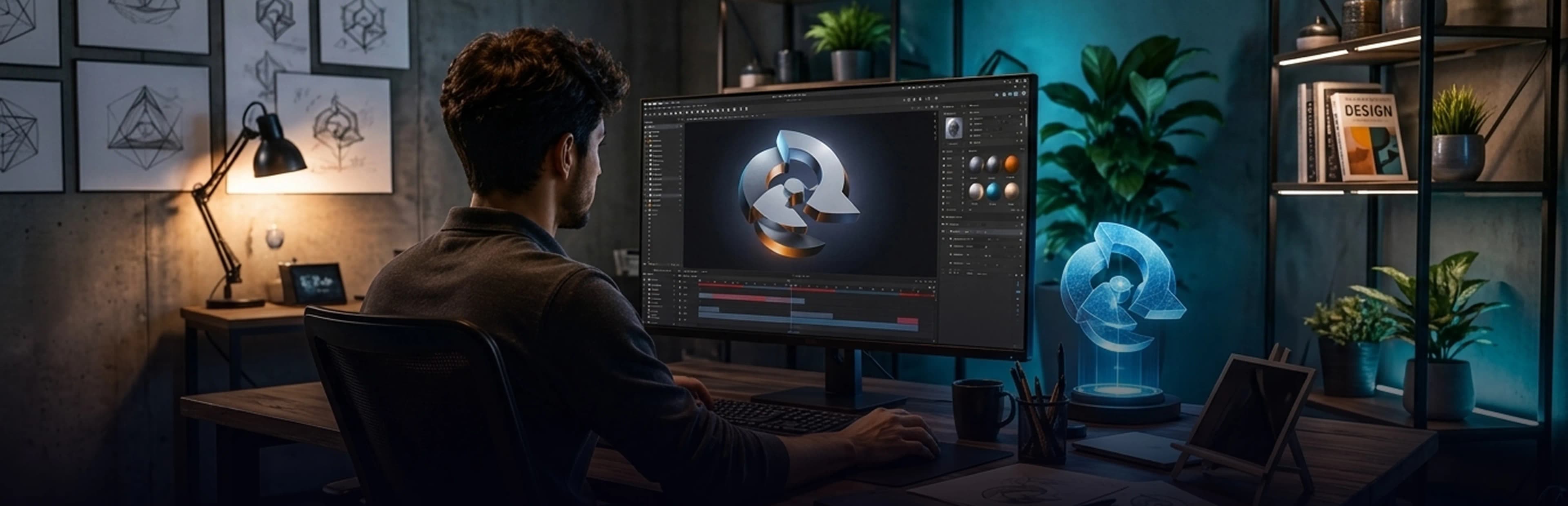
To create a 3D logo animation, first the original design needs to be made and separated into elements that will move independently. After this, depth can be implemented through various tools like extrusion, bevels, texture, material, and lighting. Then, animation of properties like rotation, scaling, positions, and camera movements will need to be made. The workflow for 3D logo animation After Effects will also vary from key-frame animation, post-production effects, etc. The important thing is that there will be no hurried movements, and sufficient time must be given to users to get acquainted with the logo. Lastly, it is required to assess the animation properly and check how well the artwork looks on different screens.
Which app is best for 3D logo design?
Depending on the requirements of a project, the best application changes. The level of complexity in the modeling, style of animation, rendering specifications, and final requirements of the production are important in the selection of software. Adobe After Effects is suitable for motion graphics as well as for keyframe animation and post-production. But 3D software allows for more control over geometry, materials, and lighting. As a rule, 3D animation companies use a combination of programs rather than rely on any one software for the whole process. To create a simple animated logo, a motion graphics approach can be sufficient, but more sophisticated 3D projects may need certain modeling and rendering applications. The final choice of software must correspond to the project’s creative and technical demands.
Conclusion
A successful 3D animation logo design involves combining effective branding techniques with thoughtful aspects of motion, dimensions, lights, colors, camera movement, and quality of work. It is not a matter of striving to use every available means of animation; the aim is to attain a movement that helps in making the brand recognizable and memorable. The 3D logo animation should preserve the initial identity while contributing to the distinctive visual impression made by the organization on different platforms such as websites, social media, videos, etc. As digital branding continues developing, the importance of flexible and mobile animations is rapidly increasing. Hence, designers and 3D animation companies have managed to achieve the combination of creativity and usability, creating effective animated logos that look good and communicate the message.
Written By Charu Sharma